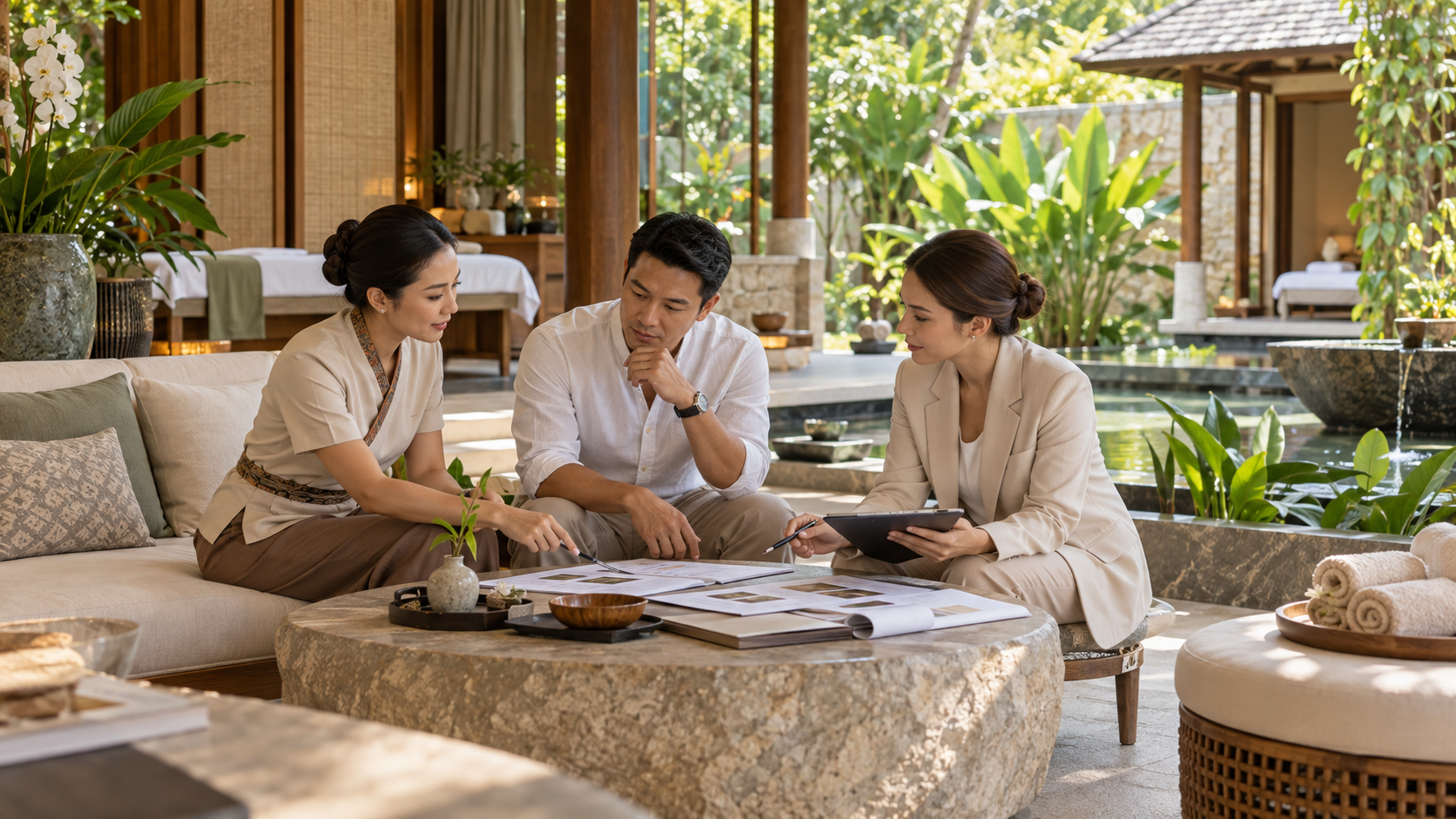
Wellness tourism is becoming easier to market and harder to govern. A destination can assemble spas, retreats, food, nature, traditional practice and medical services under one attractive promise, but visitors still need to know what is credible, who is accountable and how quality is checked. Operators need the same clarity before they invest in a new programme or accept a destination label.
South Korea provides a timely case study. Its Ministry of Culture, Sports and Tourism says the Act on the Promotion of the Healing Tourism Industry took effect on 9 April 2026. Subordinate regulations followed on 21 April. The ministry describes a framework that includes a national master plan, professional workforce development, business registration, industry surveys and designated healing-tourism districts.
This is not a template that Thai businesses can import as law. Korea and Thailand have different institutions, licensing systems, health-service boundaries and tourism strategies. It is, however, a useful operating benchmark. The Korean approach shows what happens when a wellness destination moves from promotion towards a system: definitions become important, evidence must be organised, competencies need to be visible, and public claims require a route back to accountable businesses.
Why Korea's 2026 shift matters to spa leaders
The commercial context is substantial. The Global Wellness Institute reported that Asia's wellness economy reached US$2 trillion in 2024. It estimated Asia's wellness-tourism market at US$215 billion, growing 31% in that year, with Thailand and South Korea both among the fast-growing country markets at 36%. These are industry estimates, not a guarantee of revenue for an individual spa. They do explain why governments and destinations are paying closer attention to quality infrastructure.
Korea's ministry says it has worked with the Korea Tourism Organization since 2017 to select “Excellent Wellness Tourism Destinations”. In 2026 it chose 20 destinations with strong international-visitor capabilities and quality programmes from an existing group of 88. Each of the 20 could receive up to KRW 50 million for measures such as overseas promotion, digital service environments and product development.
That programme and the new Act are related, but they are not the same thing. The Act creates an institutional framework. The destination programme selects and supports market-ready places. A third layer appears in local initiatives such as Seoul's 2026 city programme. Keeping those layers separate prevents a common mistake: treating a marketing selection as if it were a universal legal certification, or treating registration as proof that every guest experience is excellent.
Lesson one: define the product before promoting the category
Korea's implementing decree identifies a broad set of healing-tourism resources, including landscape, hot springs, food, barefoot walking, craft, meditation, dance, art, music and physical activity. The range is commercially appealing, but breadth increases the risk of vague promises. A destination that calls everything “healing” may leave visitors unable to distinguish a spa treatment from a cultural workshop, a nature experience or a regulated medical service.
A Thai operator should begin with a service taxonomy. For every offer, record the primary purpose, delivery setting, provider competence, intended guest, exclusions and claims boundary. Separate hospitality language such as relaxation, restoration and cultural participation from claims about diagnosing, treating or preventing a health condition. If a programme combines spa, clinical screening and tourism, the guest should be able to see where one scope ends and another begins.
This principle extends the existing healing-led Thai spa product playbook. The product should have a controlled promise, a coherent sequence and a named owner before it is placed inside a larger destination narrative. Destination branding cannot repair an offer that lacks contraindications, timing, capacity or accountable delivery.
Lesson two: build a registration-ready evidence file
The official Korean implementation rules state that an applicant for healing-tourism business registration submits an application with supporting documents, including a business plan containing the operating plan for its healing-tourism programme. The exact Korean requirements do not apply in Thailand, but the underlying discipline is useful: an operator should be able to explain what it does in a reviewable file.
Create one evidence register for each programme. It should include the service description, guest journey, responsible manager, practitioner roles, qualifications, supplier agreements, claims and source dates, suitability questions, contraindications, consent points, emergency response, incident records, insurance position, data handling, accessibility, environmental controls and revision history. Link each item to the current document rather than storing disconnected files in personal folders.
Keep legal compliance separate from voluntary quality evidence. The Thai spa licensing guide is a starting point for local obligations, but operators should confirm their actual services, location and professional scope with the relevant Thai authorities and qualified advisers. A tourism badge, an award or a foreign standard does not replace the licences required for the business that is actually operating.
The evidence file should also show change. When a product gains a new practitioner, technology, herbal ingredient, transport partner or medical component, record who reviewed the change and what controls were updated. Registration readiness is not a one-time folder prepared for an inspection; it is the ability to produce a trustworthy current account of the service.
Lesson three: treat certification as observed performance
Korea's decree provides for procedures around certification of excellent healing-tourism facilities. The practical lesson is that quality cannot be established from promotional copy alone. Evidence on paper must match what happens when a guest books, arrives, asks a question, changes a preference or reports a problem.
Seoul's September 2026 destination selection offers a concrete example of review design. The Seoul Metropolitan Government said 217 candidates entered through an open call and recommendations. Fourteen experts used two rounds of written evaluation followed by on-site inspections to select 100 destinations. The city grouped them into Rest, Taste and Style categories, showing that a portfolio can include varied experiences while still using a defined review process.
A spa can rehearse this logic without claiming certification. Use a document review to test policies, training records and supplier evidence. Follow with an on-site review that observes booking accuracy, arrival, privacy, consultation, hand hygiene, room reset, pressure and temperature communication, product traceability, payment and incident escalation. Add a sample guest journey, because systems often fail at handovers rather than within one department.
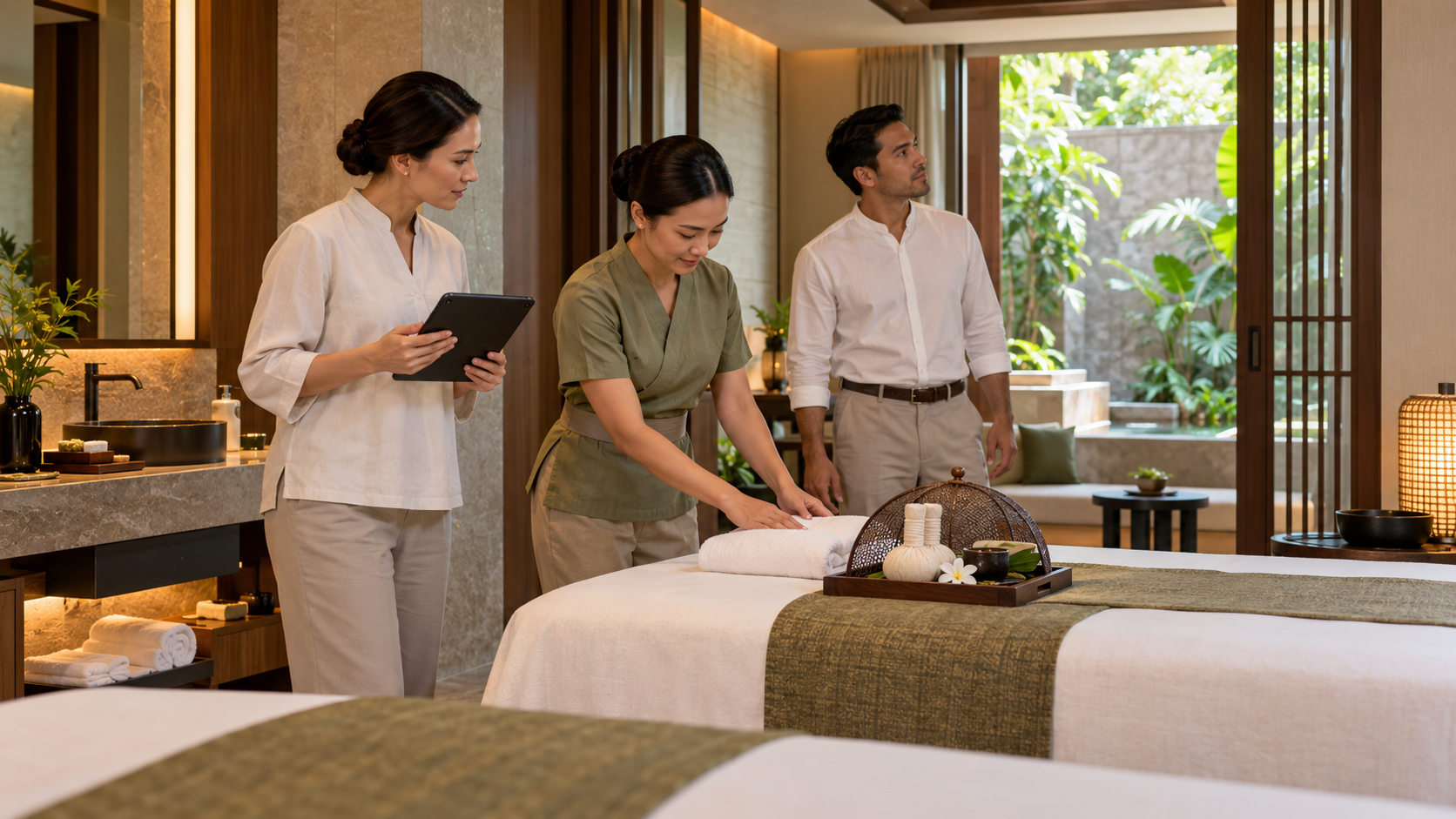
Record findings as observable facts. “Staff need more training” is too vague. “Three of five sampled consultations did not confirm pressure preference before treatment” identifies a behaviour, a sample and a repair target. Assign an owner, deadline and verification method. A second review should confirm that the correction works during normal service, not only when managers are watching.
Lesson four: make workforce competence visible
Korea's ministry lists professional workforce development among the Act's planned measures. That matters because wellness tourism combines technical delivery with hospitality, culture, language and risk judgement. A certificate of attendance does not show whether a person can perform a task consistently or recognise when to stop.
Build a role-to-competence matrix. A therapist may need verified treatment technique, consultation, contraindication screening, consent, draping, hygiene, product knowledge and incident response. A receptionist may need booking accuracy, language support, privacy, accessibility, medical-claim boundaries and escalation. A guide or partner driver may need timing, guest identification, handover and emergency communication. Managers need audit, coaching and corrective-action skills.
For each competence, define the evidence: observed practice, scenario test, case discussion, language check or supervised delivery. Set reassessment intervals according to risk and frequency. Low-volume emergency procedures may require rehearsal more often than familiar daily tasks. A formal staff training programme should therefore produce competence records, not only slides and attendance sheets.
Protect workforce wellbeing as part of quality. Destination growth can increase late changes, group arrivals, language pressure and physically demanding schedules. Track preparation time, treatment load, breaks, overtime, injuries, turnover and psychological safety. A service cannot remain credible if its quality depends on exhausted people silently compensating for weak systems.
Lesson five: govern the boundaries with medicine and data
Wellness destinations increasingly combine diagnostics, traditional practices, beauty, movement and hospitality. That creates attractive itineraries and serious boundary questions. Operators should never allow a destination label to blur who is practising medicine, who holds clinical responsibility, which data are health data, or what happens when screening identifies a concern.
Use written referral and handover rules. State which observations a spa practitioner can record, which questions require a licensed clinician, when a service must be postponed, and how consent is obtained before information moves between businesses. Avoid copying test results into spa booking notes simply because the technology allows it. The wellness medical screening governance guide provides a deeper framework for device validation, privacy, referral and claims.
Marketing needs the same boundary. “Part of a recognised wellness destination” is not evidence that a treatment improves a disease. “Selected for a city tourism programme” does not mean clinically certified. Preserve the exact name, year, selecting body, scope and status of any recognition. Remove expired marks promptly and keep the source record behind every claim.
Lesson six: design a destination system, not a list
The Korean framework includes industry surveys and healing-tourism districts, while Seoul's programme connects selected places with a travel week and future tourism products. The strategic idea is coordination: a destination becomes useful when transport, booking, information, quality, language and recovery time work across businesses.
Thai destinations can map the complete visitor chain. Start with discovery and booking, then airport or hotel arrival, travel time, spa consultation, treatment, food, nature or cultural activity, rest, payment and follow-up. Identify where responsibility changes hands. Define minimum information that must travel with the guest and information that must not be shared without consent.
Do not force every partner into one undifferentiated standard. A community craft workshop, hotel spa and medical clinic have different risks. Use a common core for truthful marketing, guest identity, consent, complaints, emergency contacts, accessibility and data handling, then add service-specific modules. Nature-linked offers can use the nature-positive spa experience framework to manage group size, local benefit and environmental impact.
Destination governance also needs a removal process. Define what triggers a warning, corrective action, suspension or exit. Publish how complaints reach the responsible organisation. A label gains trust when the system can respond to weak delivery, not when membership is permanent.
A 90-day readiness plan for Thai operators
Days 1–30: map scope and evidence
List every wellness-tourism product, claim, provider and partner. Confirm the legal entity responsible for each service and the licences or professional scopes involved. Build the evidence register and remove unsupported language. Check current contracts, insurance, qualifications, source records and privacy flows. Select one priority product rather than attempting to repair the whole menu at once.
Days 31–60: test competence and delivery
Convert policies into observable standards. Run role-based scenarios, sample records and complete an unannounced guest-journey review. Include bookings from international numbers, accessibility questions, contraindications, delayed transport, a requested treatment change and a simulated incident. Log facts, owners and deadlines. Update the relevant standard operating procedures only after the team confirms that the revised process is practical.
Days 61–90: verify and connect
Repeat the failed samples and confirm that corrective actions hold under normal workload. Prepare a concise partner pack covering scope, inclusions, exclusions, timing, guest information, claims, emergency contacts and data rules. Test one end-to-end itinerary with all handovers. Review the evidence with an independent person who was not responsible for creating it.
Measure readiness through evidence completeness, observed compliance, open corrective actions, guest comprehension, incident trends, complaint closure, partner handover accuracy, staff load and repeat audit results. Do not reduce the system to a single vanity score. A high average can hide one critical failure.
Conclusion
Korea's new framework is valuable to Thai spa leaders because it makes the infrastructure behind wellness tourism visible. Registration asks a business to define itself. Certification asks whether evidence and delivery align. Workforce development asks who is competent. Districts and destination programmes ask how separate organisations create a coherent visitor experience.
The lesson is not that every spa needs another badge. It is that credible growth requires an evidence trail from public promise to accountable practice. Thai operators that can define scope, prove competence, govern boundaries, verify delivery and coordinate partners will be better prepared for any future standard—and more trustworthy today.
Practical quality check for Wellness Tourism Standards: Lessons from Korea
Digital topics are valuable when they remove friction from the guest journey and the team workflow. For this article, the test is simple: can a spa owner read "Wellness Tourism Standards: Lessons from Korea" and know what to check, what to improve and what result should change in the business? If the answer is vague, the topic needs to be translated into a concrete operating decision, not left as a broad marketing idea.
Use this topic as a short management review. Compare the current guest journey with the promise in the title, then look for gaps in booking data, response quality, system adoption, page clarity and operational handoffs. The strongest version of the article is the one that connects the idea to real rooms, real staff behavior, real booking steps and real follow-up after the visit.
Owner checklist
- Define the decision: write what the owner, manager or front desk should change after reading about Wellness Tourism Standards: Lessons from Korea.
- Check the evidence: collect the page, listing, menu, script, photo, review or operating report that proves the current situation.
- Protect the guest experience: make sure the change improves clarity, comfort, trust, timing or consistency for the client.
- Choose one measure: review qualified enquiries, confirmed bookings, response time and review quality so the team can tell whether the improvement worked.
How NUAD SPA would apply it
NUAD SPA would treat Wellness Tourism Standards: Lessons from Korea as a focused workstream, not an isolated article topic. The first step is to map the current process, then decide whether the main blocker is positioning, service design, team execution, digital visibility, booking friction or retention. That diagnosis keeps the recommendation close to the title and avoids generic advice.
The next step is a two-week action sprint: update one public-facing touchpoint, brief the team on the new standard, test the booking or service flow, and collect feedback from staff and guests. This makes the article useful because it creates a next move, not only a point of view.
Risks to avoid
The common mistake is to make Wellness Tourism Standards: Lessons from Korea sound bigger than the spa can operationally support. A campaign can create demand the reception cannot answer; a new treatment can promise benefits the team has not been trained to deliver; a design trend can look attractive but reduce flow or profitability. The safer approach is to pair every idea with an owner, a checklist and a visible standard.
Frequently Asked Questions
Does Korea's Healing Tourism Industry Act apply to Thai spas?
No. It is South Korean law and does not replace Thai licensing, health, labour, privacy or tourism requirements. Thai operators can use its structure as a benchmarking prompt while confirming their own obligations with the relevant Thai authorities and qualified advisers.
Is business registration the same as quality certification?
No. Registration establishes that a business has met the applicable entry requirements. Certification or selection may assess additional quality criteria. Operators should state the exact scheme, body, year and scope rather than using the terms interchangeably.
What evidence should a wellness-tourism operator keep?
Keep a current programme plan, scope and claims register, practitioner competencies, licences, supplier records, suitability and consent processes, privacy map, incident and complaint records, environmental controls, partner handovers, corrective actions and revision history.
How can a small spa prepare without a large compliance team?
Start with one priority product and one accountable owner. Build a simple evidence register, observe the complete guest journey, correct the highest-risk gaps and verify the repairs. A focused current system is more useful than a large folder nobody maintains.
Can destination recognition be used as a health claim?
No. Tourism recognition may indicate selection under a programme, but it does not by itself prove that a service diagnoses, treats or prevents a condition. Health-related claims require an appropriate legal scope and reliable evidence specific to the claim.
Sources and References
- Republic of Korea Ministry of Culture, Sports and Tourism — First year of the Healing Tourism Industry Act
- Korean National Law Information Center — Enforcement Decree of the Healing Tourism Industry Act
- Korean National Law Information Center — Enforcement Rules of the Healing Tourism Industry Act
- Seoul Metropolitan Government — 100 Wellness Tourism Destinations for 2026
- Global Wellness Institute — Asia's US$2 trillion wellness market
Need to turn this diagnosis into an action plan? Talk to NUAD SPA.