
Travellers are taking shorter trips while asking those trips to do more. They want less planning friction, clearer choices and enough uncommitted time to feel restored rather than rushed. For spas, this creates a service-design problem: a treatment may last 60 minutes, but the guest experiences the entire interval from discovery and arrival to changing, treatment, recovery and departure.
A short-stay spa journey should therefore be designed around the guest's total time budget, not just the booked treatment. The opportunity is not to promise instant transformation. It is to remove avoidable decisions, state the real duration, protect a recovery window and give staff a workable sequence that can be delivered consistently.
Key takeaways
- Sell the complete time commitment from arrival to departure, not only hands-on treatment minutes.
- Offer a small number of clear journey lengths with credible inclusions instead of an overloaded menu.
- Use pre-arrival choices to reduce friction, while preserving consent and an easy way to change preferences on site.
- Protect transition and recovery time; a tightly stacked itinerary can defeat the purpose of a restorative visit.
- Measure punctuality, unused capacity, guest understanding, recovery-space pressure and repeat choice before scaling.
Why short-stay spa journeys need a different model
Current travel research points to a tension between limited time and the desire to recover. Booking.com's 2027 Travel Predictions analysis, published on 21 October 2026, reports that 85% of 28,230 respondents had returned from a holiday feeling more tired than when they left. The company connects this result with over-packed itineraries, difficult travel and decision burden. The survey covered 32 markets, including Thailand, but it measures stated experience and intention among people planning travel; it does not prove demand for a particular spa product.
Hilton's 2027 Trends Report provides a second signal. Morning Consult surveyed 14,744 intended travellers across 14 countries between 18 May and 1 June 2026. Among employed travellers planning more short trips, 25% said shorter breaks fit more easily around work. The report also found that 51% liked to plan trips around one defining experience, while 67% preferred to experience a lot in a short time. Those two groups need different levels of guidance, but both need accurate time information.
For spa leaders, the practical lesson is not that every guest wants a micro-retreat. It is that duration has become part of the product. A guest with two free hours before a flight, a couple on a weekend break and a local resident between meetings may book the same treatment but require different arrival, changing and recovery arrangements.
Read the evidence without turning a trend into a promise
Brand-commissioned travel studies are useful because they are current and large, but they are not neutral forecasts of spa revenue. Booking.com and Hilton both have commercial interests in travel. Their findings describe survey responses and selected activity within their own businesses. Operators should use them to frame questions, then test those questions with their own booking, capacity and feedback data.
The Tourism Authority of Thailand adds an official destination perspective. In its 14 October 2026 statement on Thailand's high-value Visitor Economy direction, TAT placed wellness within a value-over-volume strategy and described “Healing is the New Luxury” through time, space, nature, reconnection and personal wellbeing. It also set out an ambition for a 60:40 distribution between major and emerging destinations. This is strategic positioning, not evidence that a specific treatment will sell. It does, however, support a move away from measuring value only through treatment count.
A separate commercial dataset offers an operating counterpoint. Spa Business reported that Trybe's 2026 platform analysis covered more than 400 spa, leisure and activity businesses and £181 million in revenue. The published summary says 51% of bookings occurred outside traditional office hours, 76% were made on mobile devices and 93% of online bookings in the dataset were packages. The sample is weighted towards the United Kingdom and comes from one software platform, so its regional figures should not be treated as Thai benchmarks. Its value lies in the operating questions it raises: can guests understand and book the complete journey without staff intervention, and does the package use capacity intelligently?
Define the product by total time to door
A treatment menu usually presents hands-on duration: 60 or 90 minutes. A short-stay menu should also disclose the expected total visit. If a 60-minute massage normally requires a 15-minute arrival, 10 minutes for changing and 20 minutes for tea or quiet recovery, the guest needs to see that the experience occupies about 105 minutes.
Start by timing real journeys. Measure arrival, consultation, changing, room turnover, treatment, post-treatment transition, payment and departure. Do this during normal operations, not only in an ideal rehearsal. The result may reveal that a “quick” experience is unpredictable because the front desk, locker room or payment stage varies more than the treatment itself.
Create a small number of journey formats around verified operating times. For example, an operator might test a compact visit, a standard reset and an extended retreat. These are design labels, not universal durations. Each property must calculate its own sequence, legal requirements, staffing and safety conditions.
For every format, publish:
- recommended arrival time;
- hands-on treatment duration;
- facilities and transitions included;
- expected total time on site;
- what happens if the guest arrives late;
- whether food, heat, water or movement activities are optional;
- the latest practical departure time for transport or another booking.
This approach complements the site's guide to creating a signature treatment menu. That resource addresses menu identity and appeal; the short-stay model adds total-time transparency and operational sequencing.
Design three layers: core, transition and recovery
The core experience
The core is the service the guest actively selects: massage, facial, body treatment, guided movement, thermal sequence or another defined spa experience. Keep the promise specific. “A 60-minute oil massage with a choice of pressure” is more useful than language that implies a guaranteed physical or emotional transformation.
Do not compress screening or consent to create a faster product. If a service requires health questions, contraindication checks or a qualified practitioner, those requirements remain. The short-stay design should remove administrative repetition, not safety.
The transition layer
Transitions include finding the spa, checking in, storing belongings, changing, moving between rooms and understanding what happens next. They rarely appear in marketing, yet they determine whether a short visit feels calm or hurried.
Send practical arrival information in the booking confirmation: entrance, floor, transport timing, clothing, facilities, late policy and a telephone or messaging contact. Ask only the preference questions needed to prepare the visit. Repeat essential consent on site, because a digital selection should never remove the guest's right to change their mind.
The site's spa front-desk experience guide is especially relevant here. Reception is not a gap between booking and treatment; it is the control point for timing, expectation and handoff.
The recovery layer
Recovery is the protected period after the core service. It may be quiet seating, water, tea, fresh air or simply enough time to dress without pressure. It should not become an automatic sequence of add-ons.
Give guests a clear choice: leave promptly, use a quiet recovery area for a stated period, or continue into a separately booked facility. This prevents the lounge from becoming an unmanaged waiting room and helps staff forecast capacity. It also recognises that some travellers need to catch transport while others value an unhurried close.
Reduce decisions before arrival, not guest agency
Booking.com's analysis describes decision burden as one reason travel can feel tiring. A spa can reduce that burden by simplifying the journey without deciding everything for the guest.
Use a short sequence of meaningful choices: journey length, service type, pressure preference where relevant, solo or shared booking, accessibility requests and preferred recovery option. Avoid long forms that ask for marketing data or personal details unrelated to delivery. Show the total price and inclusions before payment.
Mobile presentation matters. The Trybe dataset reported that 76% of bookings were made on smartphones or tablets. On a small screen, the most important facts should not sit behind decorative copy: total visit time, treatment time, price, location, availability, cancellation and late-arrival terms.
Human help still has a role. Hilton found that 70% of surveyed travellers trusted hotel staff as a travel-planning resource, compared with 63% who trusted AI tools; trust was lower for nuanced AI recommendations. A digital flow can narrow the options, but a trained host should be available when a guest has accessibility needs, uncertain timing, cultural questions or a complex service decision.
Build packages around sequence, not accumulation
A package is not automatically restorative. Adding a treatment, sauna, lunch, class and retail offer may increase the list of inclusions while making the visit harder to navigate. A short-stay package needs one clear purpose and a sequence that leaves room between activities.
Use a simple test: if one element runs ten minutes late, does the rest of the journey collapse? If the answer is yes, the package is over-engineered. Add buffers at the points most exposed to variation, such as arrival, changing, food service or movement between hotel areas.
Where Thai cultural elements are included, choose relevance over decoration. A foot-cleansing ritual, herbal compress, tea service or mindfulness practice should be accurately described, properly supplied and delivered by trained people. Do not present a cultural reference as a medical intervention or attach it to a generic package solely to signal place.
TAT's value-over-volume direction is useful here. Value can include local knowledge, skilled labour, credible sourcing, time, privacy and connection to place. It does not require an ever-longer list of treatments.
Protect capacity without making the guest feel processed
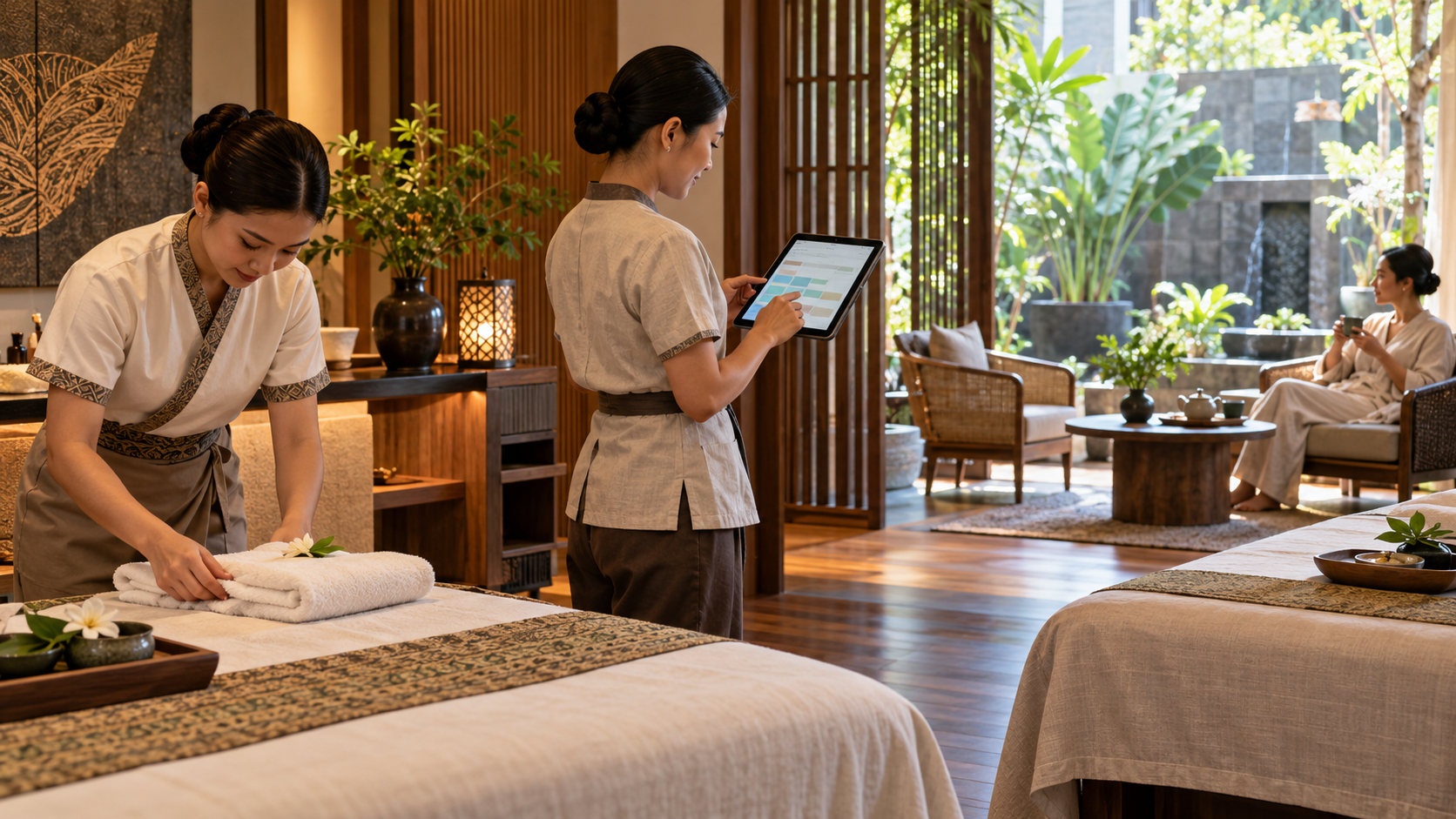
Short journeys depend on punctual handoffs. Assign ownership for the arrival window, room readiness, practitioner start, recovery-space availability and departure support. A shared operating board can show status without exposing sensitive guest information.
Define what staff may adjust. A host might move tea from before to after treatment, offer a quieter recovery seat or help with transport timing. Staff should not shorten a paid treatment, skip consent or accelerate a guest through changing simply to recover a delayed schedule unless the documented late policy applies and the guest understands the option.
Use capacity rules for the entire journey. Treatment rooms may be available while lockers, reception or recovery seats are full. The existing spa day-pass capacity-control playbook explains why admission should be linked to the constrained facility, not only to apparent room availability.
Pricing can vary by demand only when the differences are transparent and fair. Do not hide a lower-value version behind the same name, or use urgency language that makes guests rush a wellbeing decision. Compare revenue with guest understanding, staff load and service consistency rather than reading price as the only signal of success.
Train the team for time-aware hospitality
A short-stay journey requires staff to be precise without appearing hurried. Training should cover the published timeline, handoff language, consent, accessibility, late arrivals, transport questions, optional facilities, recovery choices and the authority to pause when safety or dignity requires it.
Rehearse realistic scenarios: a guest arrives with luggage; a flight is delayed; a couple has different service preferences; a treatment room is not ready; a guest needs more time to change; a practitioner identifies a contraindication; the recovery lounge is full. The team needs alternatives that preserve clarity and value.
Do not turn punctuality into pressure on therapists. If the schedule works only when consultations are rushed, breaks disappear or room turnover is unrealistically short, the service model is defective. Staff timing data should be used to repair the system, not to blame individuals for normal variation.
Measure the whole journey
Track the difference between promised and actual total visit time. Separate treatment punctuality from arrival, changing, room and payment delays. A single average can conceal a reliable treatment inside an unreliable journey.
A practical pilot dashboard can include:
- booking completion by device;
- questions asked before booking;
- arrival-time accuracy and late-arrival causes;
- start-time and departure-time variance;
- treatment-room, locker and recovery-seat utilisation;
- guest understanding of total time and inclusions;
- requests to shorten, extend or change the journey;
- staff overtime, missed breaks and reset pressure;
- repeat booking of the same journey length;
- complaints, incidents and accessibility failures.
Guest feedback should ask whether the pace felt clear, calm and appropriate. Avoid questions that imply a clinical outcome. A spa can measure whether guests felt rushed or understood the sequence; it should not claim to have “reset the nervous system” unless that statement is properly defined, substantiated and legally appropriate.
For services that continue after departure, the site's wellness-retreat aftercare standard provides a separate framework for consent, scope and follow-up. Short-stay design should not quietly expand into health coaching or ongoing monitoring without those safeguards.
An eight-week pilot
Weeks 1–2: observe and define
Time current journeys from booking to departure. Identify the constrained spaces and the points where guests ask the same questions. Select one audience and one journey length for the pilot. Write the promise in plain language.
Weeks 3–4: configure and rehearse
Build the mobile booking path, confirmation, arrival instructions and staff operating sequence. Test the journey with luggage, accessibility needs, late arrival and a full recovery area. Confirm that consent and screening remain intact.
Weeks 5–8: launch with controlled capacity
Limit daily slots, collect timing and feedback after each visit, and review the effect on adjacent services. Adjust buffers, description and capacity before adding packages or paid promotion.
At review: scale the sequence, not the slogan
Continue only if the journey is understandable, deliverable and commercially useful without increasing safety incidents, staff pressure or guest confusion. The strongest result may be a better sequence for existing treatments rather than a new branded product.
Conclusion: make limited time feel well held
Short trips do not require spas to deliver more in less time. They require operators to make time visible, reduce avoidable friction and protect the intervals that help a visit feel complete.
A credible short-stay spa journey states the full duration, keeps choices manageable, respects consent, connects digital convenience with human judgment and measures the entire path. When the sequence works, the guest does not feel hurried through a treatment. They feel that limited time has been understood and well held.
Practical quality check for Short-Stay Spa Journeys: Recovery by the Hour
People topics only matter when they change daily behavior. For this article, the test is simple: can a spa owner read "Short-Stay Spa Journeys: Recovery by the Hour" and know what to check, what to improve and what result should change in the business? If the answer is vague, the topic needs to be translated into a concrete operating decision, not left as a broad marketing idea.
Use this topic as a short management review. Compare the current guest journey with the promise in the title, then look for gaps in training records, service observations, therapist confidence and guest feedback. The strongest version of the article is the one that connects the idea to real rooms, real staff behavior, real booking steps and real follow-up after the visit.
Owner checklist
- Define the decision: write what the owner, manager or front desk should change after reading about Short-Stay Spa Journeys: Recovery by the Hour.
- Check the evidence: collect the page, listing, menu, script, photo, review or operating report that proves the current situation.
- Protect the guest experience: make sure the change improves clarity, comfort, trust, timing or consistency for the client.
- Choose one measure: review qualified enquiries, confirmed bookings, response time and review quality so the team can tell whether the improvement worked.
How NUAD SPA would apply it
NUAD SPA would treat Short-Stay Spa Journeys: Recovery by the Hour as a focused workstream, not an isolated article topic. The first step is to map the current process, then decide whether the main blocker is positioning, service design, team execution, digital visibility, booking friction or retention. That diagnosis keeps the recommendation close to the title and avoids generic advice.
The next step is a two-week action sprint: update one public-facing touchpoint, brief the team on the new standard, test the booking or service flow, and collect feedback from staff and guests. This makes the article useful because it creates a next move, not only a point of view.
Risks to avoid
The common mistake is to make Short-Stay Spa Journeys: Recovery by the Hour sound bigger than the spa can operationally support. A campaign can create demand the reception cannot answer; a new treatment can promise benefits the team has not been trained to deliver; a design trend can look attractive but reduce flow or profitability. The safer approach is to pair every idea with an owner, a checklist and a visible standard.
Frequently asked questions
What is a short-stay spa journey?
It is a spa visit designed around a limited and clearly stated total time budget, including arrival, changing, the core service, recovery and departure rather than treatment minutes alone.
Should a spa shorten consultations for time-poor guests?
No. Required screening, consent and contraindication checks remain essential. Save time by removing repeated administration, clarifying choices before arrival and improving handoffs, not by weakening safety.
How many journey lengths should a spa offer?
Start with a small number that the team can deliver reliably. Measure actual visit duration and constrained capacity before adding more options. Clarity is usually more valuable than a large menu.
Can a short-stay package include several activities?
Yes, if the sequence has a clear purpose, realistic buffers and transparent inclusions. Remove activities that make the guest rush or create fragile handoffs.
What is the most useful pilot measure?
Compare the promised and actual total visit time, then examine where the variance occurs. Combine that with guest understanding, staff load, capacity pressure, incidents and repeat choice.
Sources and references
- Booking.com — How will Group Budgets, Personalized Wellness & “Recovery-Maxxing” shape 2027 Guest Experiences?, 21 October 2026.
- Hilton — The Great Rebalance: 2027 Trends Report, 29 September 2026.
- Tourism Authority of Thailand — TAT positions Thailand for high-value tourism at CNN Global Perspectives in Bangkok, 14 October 2026.
- Spa Business — Trybe report finds 93 per cent of spa bookings on its platform come through packages, 19 October 2026.
Need to turn this diagnosis into an action plan? Talk to NUAD SPA.