
Menopause is attracting more attention from health systems, employers and consumer brands. For spa leaders, that attention creates a useful question and a dangerous shortcut. The useful question is whether a guest can adjust heat, pressure, timing, privacy and communication without embarrassment. The shortcut is to turn a life stage into a premium treatment claim.
A September 2026 Boston Consulting Group press release distributed by Public gives the subject commercial urgency. Its global survey covered 10,608 respondents in 12 countries and found especially high engagement, spending and unmet need among women in perimenopause or menopause. Yet the study does not prove demand for a particular spa treatment, and Thailand was not one of the surveyed countries. Its most responsible lesson for operators is therefore not “launch a menopause cure”. It is “design a better service, test it with guests and keep every health claim inside the evidence and professional scope that support it”.
The World Health Organization describes menopause as a normal point in a continuum of life stages, not a disease. Experiences vary substantially. Some people have few effects; others report hot flushes, night sweats, sleep difficulty, mood changes or other concerns that affect daily life. A menopause-aware spa standard should respect that variation without trying to diagnose its cause.
What the new evidence says—and what it does not
BCG's 2026 study was prepared for the St. Moritz Longevity Forum. Across the 12 countries surveyed, women undergoing perimenopause or menopause reported trying more health and longevity interventions than other groups while satisfaction remained around 50 percent. The study also reported median longevity spending of US$84 a month for this group, compared with US$68 for women in other life stages and US$73 for men.
BCG estimated a US$350 billion global opportunity by applying stated willingness to spend more across an estimated population of one billion women in menopause who are already engaged in longevity spending. That is a modelled market estimate, not recorded spa revenue. It should not be presented as the size of a “menopause spa” market, nor as evidence that a new menu item will sell in Bangkok, Phuket or any specific location.
The stronger signal is trust. BCG found that proven solutions, health-professional recommendations, value and clinical research influence spending. A non-clinical spa does not build that trust by borrowing medical language. It builds trust by describing its service accurately, training the team, making comfort adjustable, documenting boundaries and referring health questions to qualified professionals.
WHO adds the essential human context. Perimenopause can last several years and may affect physical, emotional, mental and social wellbeing. Symptoms and their intensity differ from person to person. WHO advises people whose symptoms affect health and wellbeing to discuss options with a health-care provider. A spa can support comfort and dignity, but it should never substitute a relaxation service for appropriate clinical assessment.
Start with one promise: adaptable comfort
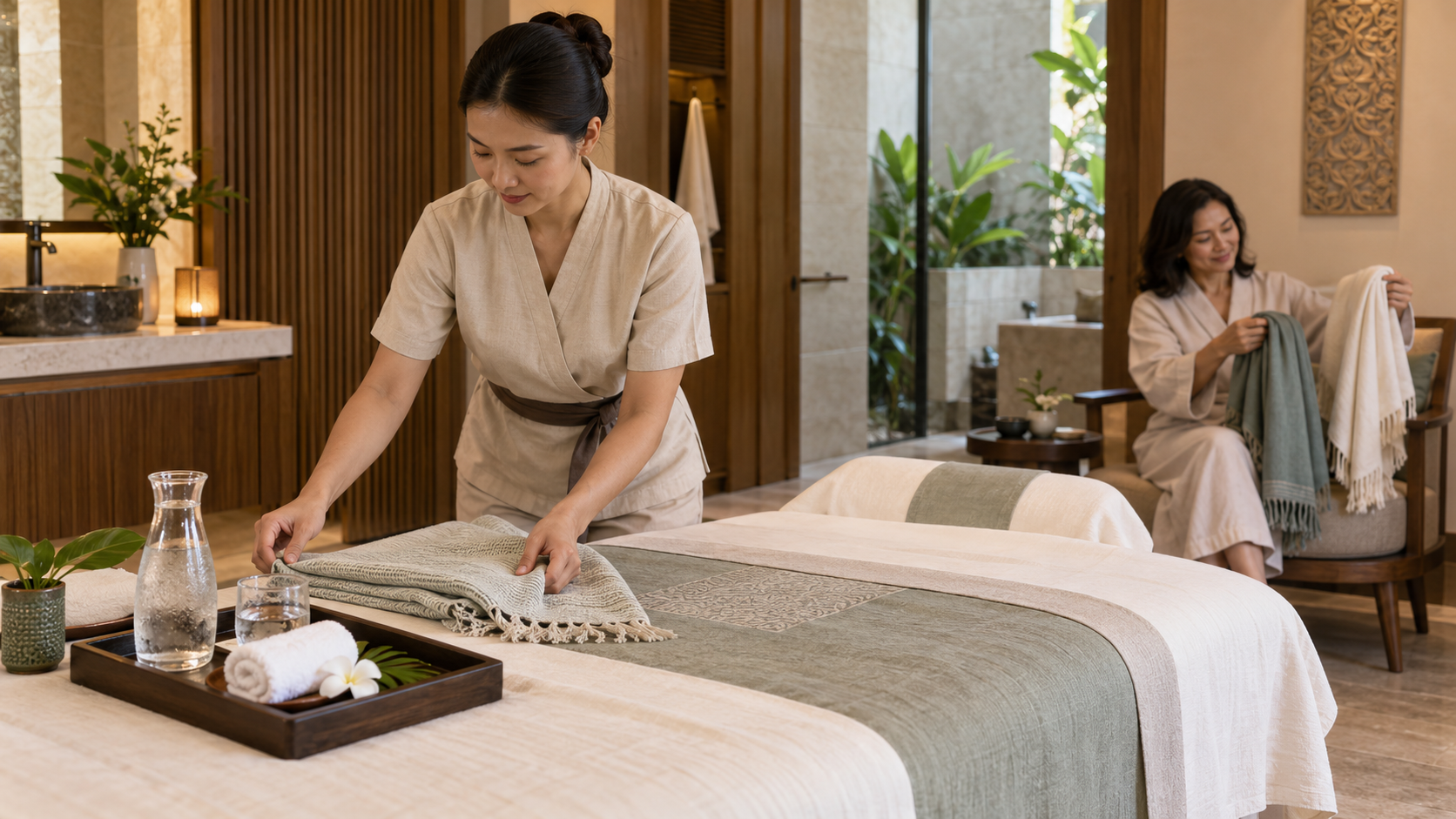
A menopause-aware service does not need to be a separate branded ritual. In many spas, the safest improvement is to make the existing journey more adaptable. Guests should be able to choose a cooler room, lighter covering, shorter heat exposure, a pause, water, a different pressure level or an earlier finish without having to disclose a diagnosis.
This approach avoids stereotyping. Not every woman in midlife is experiencing menopause; not everyone experiencing menopause identifies as a woman; and not every person wants the subject named during a spa visit. Design choices around stated comfort preferences, rather than assumptions about age or appearance.
Create a short list of controllable variables for each service:
- room temperature and airflow;
- heated bed, steam, sauna or hot-towel use;
- pressure, pace and treatment position;
- layered draping and alternative robe weights;
- water access and optional comfort breaks;
- lighting, sound and conversation preference;
- session length and an uncomplicated stop signal.
Record which choices can be changed immediately, which require a different room or booking, and which cannot be offered safely. The goal is not unlimited customisation. It is a predictable response when a guest asks for a reasonable change.
Use a consultation that protects dignity
The consultation should ask what the therapist needs to deliver the booked service safely and comfortably. “Would you prefer the room warmer or cooler?” and “Would you like the heated blanket off?” are operational questions. “Are these symptoms caused by menopause?” is a diagnostic question and does not belong in a routine spa consultation.
Review the intake form and remove curiosity that has no service purpose. Ask about relevant health conditions, medicines, allergies, recent procedures or other contraindications only where the answer changes whether or how the service can be delivered. Explain why sensitive information is requested, who can see it and how long it is kept.
If the service combines spa activity with devices, laboratory testing or clinical screening, apply a more formal governance model. The wellness medical screening governance guide separates hospitality, screening and clinical responsibilities and sets out stronger consent, evidence and referral controls.
Give every guest a simple way to pause or stop. Therapists should confirm pressure, temperature and positioning early enough to change them. A guest should not need to justify discomfort or wait until the end of a treatment to be heard.
Keep menu language outside clinical territory
Menu wording is where a sensible comfort standard can become an unsupported health claim. Avoid promising to balance hormones, treat hot flushes, correct sleep problems, prevent osteoporosis, reduce cardiovascular risk or manage anxiety or depression. These are health matters that require an appropriate evidence base and qualified care.
Describe what the guest actually receives: adjustable temperature, a pressure-led massage, a quiet rest period, lightweight draping, hydration access or a choice to omit heat. Language such as “designed for flexible comfort during life transitions” is more accurate than “menopause therapy”. Even the safer wording should match what the team consistently delivers.
The UK's National Institute for Health and Care Excellence guidance emphasises individualised care and covers clinical management options for menopause-associated symptoms. That is precisely why a spa should not translate a clinical recommendation into a treatment-menu claim. Health-care guidance belongs to health professionals; spa language should remain within the service's licensed and competent scope.
In Thailand, an official Department of Health Service Support public handbook for spa-business licensing defines spa activity under the Health Establishment Act and states that an operator must obtain the applicable health-establishment licence. Operators should confirm that any new service, practitioner role and public claim fit the licence and rules applicable to their establishment. A useful overview is also available in NUAD SPA's Thai spa licensing guide, but current official requirements and qualified advice remain controlling.
Rebuild heat and thermal journeys around choice
Heat is common in Thai and international spa journeys: steam, sauna, hot compresses, heated tables, warm oils and outdoor relaxation areas. Menopause-aware design does not mean banning heat or suggesting that everyone will react to it in the same way. It means making exposure visible, optional where possible and easy to leave.
Before a thermal experience, state the sequence, approximate duration, available cooler spaces, water access and how to exit. Do not hide a long steam or heat stage inside a package description. Provide a route that does not require a guest to cross a public area while overheated or uncomfortable. Use clean, breathable replacement linens and make robe changes easy.
Train the team to respond to discomfort rather than label it. Move the guest to a suitable area, follow the establishment's first-aid and escalation procedure, and seek medical help when indicated. Do not tell a guest that dizziness, palpitations, pain, shortness of breath or unusual distress is “just menopause”.
Facility choices should support more people without turning the space into a themed clinic. Adjustable treatment-room temperature, quiet waiting options, private changing, seating near showers, clear wayfinding and easy water access are broadly useful. The existing inclusive spa design framework can help operators connect these changes to mobility, sensory and privacy needs across the whole guest population.
Train for scope, consent and escalation
A short menopause-awareness briefing is not enough if staff still improvise claims or dismiss requests. Build competence around observable behaviours. Reception should explain adjustable options without demanding disclosure. Therapists should confirm comfort, recognise service contraindications, document material changes and use the stop-and-escalate pathway. Managers should review claims, complaints and referral relationships.
Use scenarios rather than a slide deck alone. Ask a team member to respond when a guest requests a cooler room after check-in; wants to skip the steam component; reports a new health concern; becomes distressed; asks whether massage will “fix hormones”; or wants sensitive information removed from the booking note. Observe the response and coach the exact gap.
Prepare a referral statement that is helpful without pretending to diagnose: “We can adjust the spa service for comfort, but we cannot assess the cause of that symptom. A qualified health-care professional can advise you.” Define when the service must be postponed and when emergency procedures apply. Keep current contact and escalation information accessible to the responsible team.
Training should also address language and bias. Do not joke about age, mood, body changes or memory. Do not assume that a guest wants to discuss menopause because of her age. Follow the guest's words where possible and protect privacy at reception, in shared changing areas and in handovers.
Collect less sensitive data—and use it better
Operators may be tempted to add a “menopause” field to booking profiles for marketing. That creates sensitive information with uncertain operational value. First ask whether a simple comfort preference would achieve the same purpose. “Prefers room cool; no heated blanket” is often more useful to the service team than a life-stage label.
If the business records health-related information, define the lawful purpose, access, retention, correction and deletion process under the rules that apply. Do not reuse consultation details for targeted advertising without an appropriate basis and transparent consent. Never make a guest reveal private information in front of a companion or other guests.
Separate operational notes from promotional segmentation. A therapist may need a current contraindication or comfort instruction. A marketing platform rarely needs the underlying health context. Restrict free-text notes, because casual comments are hard to govern and may expose more than the service requires.
Market inclusion without exploiting insecurity
Representation matters, but changing the age of the model in a campaign is not a complete strategy. Show adults with varied ages, bodies and roles in believable spa situations. Avoid before-and-after narratives, anti-ageing fear, hormonal shame and language that treats menopause as decline.
The age-inclusive spa marketing guide offers a broader framework for language, imagery and booking access. For menopause-aware communication, add one stricter test: could a reasonable guest mistake the wording for a medical claim? If yes, rewrite it and review the associated service.
Do not use the BCG US$350 billion estimate as a promise of spa revenue. If it is mentioned, preserve the study's scope, methodology and limitations. A credible campaign is built from the spa's own tested guest needs, not from a global number detached from local demand.
A practical 60-day implementation plan
Days 1–15: audit the present journey
Map booking, arrival, changing, consultation, treatment, thermal areas, rest and follow-up. List every fixed heat exposure, disclosure point, privacy risk and unsupported claim. Confirm what the current licence, insurer, professional scopes and product instructions allow. Interview staff about the requests they receive, then treat those recollections as leads rather than measured demand.
Days 16–30: build and rehearse the standard
Choose the comfort variables for each priority service. Update menu wording, intake questions, room setup, stop signals and escalation rules. Prepare two or three scenarios per role. Train, observe and record competence. Make one manager responsible for approving any public wording that refers to menopause, hormones, sleep, mood or other health outcomes.
Days 31–45: pilot without a medical label
Pilot the adjustable journey on existing services. Offer choices consistently to a broad sample of guests rather than selecting people by apparent age. Record option uptake, pauses, room-change requests, abandoned bookings, complaints, incidents and staff workload. Invite confidential feedback on clarity, dignity and ease of adjustment.
Days 46–60: verify and decide
Review whether the process reduced friction without causing new confusion or delay. Sample consultations and treatment notes. Check that marketing matches delivery and that staff use referrals appropriately. Fix failed controls before expanding. If demand supports a dedicated package, obtain specialist legal, clinical and insurance review before adding health-oriented language or partners.
Useful measures include the percentage of guests offered the standard choices, comfort adjustments fulfilled, heat components declined without penalty, incidents and escalations, privacy complaints, staff scenario-pass rates and repeat feedback themes. Do not measure success by sales alone. A service that converts well by overstating benefits is not a successful standard.
Conclusion
The new women's longevity research shows a large gap between engagement and satisfaction, but it does not give spas permission to medicalise menopause. The more defensible opportunity is operational: make comfort easier to request, remove unnecessary disclosure, train teams to respect scope, design safe exits from heat and keep marketing truthful.
A menopause-aware spa is not defined by a pink menu, a hormone claim or a single signature ritual. It is defined by whether a guest can be heard, adjust the experience and receive an honest answer about what the spa can—and cannot—do.
Practical quality check for Menopause-Aware Spa Services: Comfort Without Claims
People topics only matter when they change daily behavior. For this article, the test is simple: can a spa owner read "Menopause-Aware Spa Services: Comfort Without Claims" and know what to check, what to improve and what result should change in the business? If the answer is vague, the topic needs to be translated into a concrete operating decision, not left as a broad marketing idea.
Use this topic as a short management review. Compare the current guest journey with the promise in the title, then look for gaps in training records, service observations, therapist confidence and guest feedback. The strongest version of the article is the one that connects the idea to real rooms, real staff behavior, real booking steps and real follow-up after the visit.
Owner checklist
- Define the decision: write what the owner, manager or front desk should change after reading about Menopause-Aware Spa Services: Comfort Without Claims.
- Check the evidence: collect the page, listing, menu, script, photo, review or operating report that proves the current situation.
- Protect the guest experience: make sure the change improves clarity, comfort, trust, timing or consistency for the client.
- Choose one measure: review booking accuracy, staff adoption, data completeness and time saved per workflow so the team can tell whether the improvement worked.
How NUAD SPA would apply it
NUAD SPA would treat Menopause-Aware Spa Services: Comfort Without Claims as a focused workstream, not an isolated article topic. The first step is to map the current process, then decide whether the main blocker is positioning, service design, team execution, digital visibility, booking friction or retention. That diagnosis keeps the recommendation close to the title and avoids generic advice.
The next step is a two-week action sprint: update one public-facing touchpoint, brief the team on the new standard, test the booking or service flow, and collect feedback from staff and guests. This makes the article useful because it creates a next move, not only a point of view.
Risks to avoid
The common mistake is to make Menopause-Aware Spa Services: Comfort Without Claims sound bigger than the spa can operationally support. A campaign can create demand the reception cannot answer; a new treatment can promise benefits the team has not been trained to deliver; a design trend can look attractive but reduce flow or profitability. The safer approach is to pair every idea with an owner, a checklist and a visible standard.
Frequently Asked Questions
Should a spa create a treatment specifically for menopause?
Not automatically. Start by making existing services adaptable and by checking guest demand, professional scope, licensing, insurance and evidence. A dedicated service should describe what is actually delivered and must not imply diagnosis or treatment unless the business has the appropriate clinical structure and evidence.
Can a therapist ask whether a guest is menopausal?
Only when the information is genuinely necessary for the service and handled with appropriate privacy. In many cases, direct questions about temperature, pressure, heat exposure, positioning and relevant contraindications provide the operational information needed without requiring a life-stage label.
Can massage or spa heat be promoted as a menopause treatment?
A non-clinical spa should not claim that massage, sauna, steam or another spa service treats menopause or specific symptoms without an appropriate legal scope and reliable evidence. Describe the experience and adjustable comfort features, and refer health-management questions to a qualified health-care professional.
What should staff do if a guest becomes unwell during treatment?
Stop the service, protect privacy, follow the establishment's first-aid and escalation procedure, and obtain medical help when indicated. Staff should respond to the observed concern and must not dismiss it as “just menopause” or attempt a diagnosis.
How can a spa test demand without collecting sensitive health data?
Offer neutral comfort choices to all suitable guests and measure uptake, fulfilment, feedback and operational impact. A preference such as “cool room, no heated blanket” is often more useful and less intrusive than recording a menopause label.
Sources and References
- Boston Consulting Group / Public distribution — The Longevity Market Is Leaving $350 Billion on the Table
- World Health Organization — Menopause fact sheet
- National Institute for Health and Care Excellence — Menopause: identification and management
- Thailand Department of Health Service Support — Public handbook for spa-business licensing
- Global Wellness Institute — Must-Reads from the Wellness World, September 2026
Need to turn this diagnosis into an action plan? Talk to NUAD SPA.