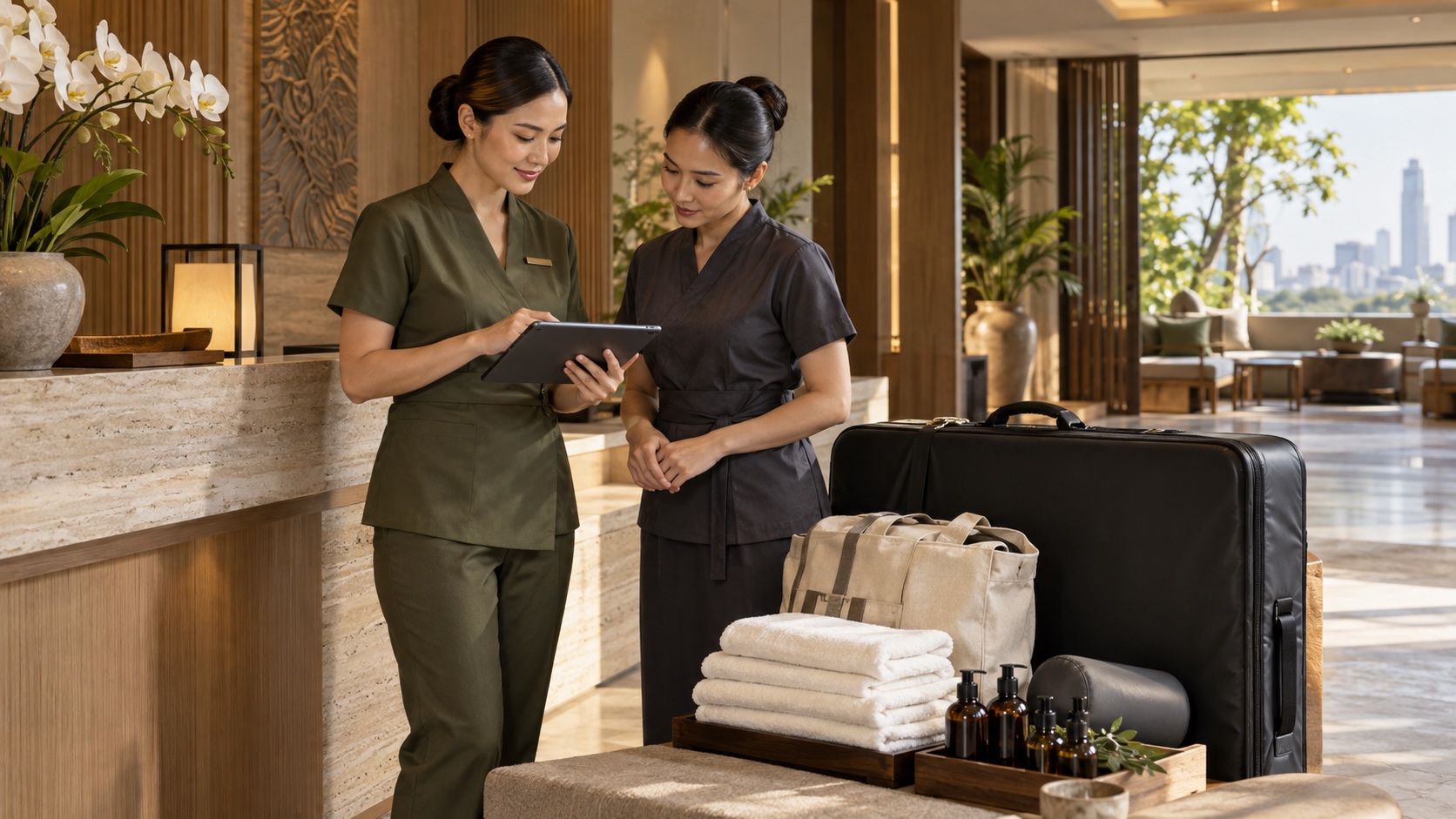
Bringing a spa experience into a private home or hotel room requires more than a portable massage table. For Loft Thai Spa in Bangkok, NUAD SPA helped develop the complete operating framework behind the service: setup, protocols, a dedicated booking journey, integration with existing spa reservations, staff assignment and team training.
The brief: extend the spa beyond its walls
The ambition was to make Loft Thai's approach to hospitality available where guests were staying. That meant translating an established spa experience into environments the team did not control: apartments, residences and hotel rooms with different layouts, access arrangements and practical constraints.
Our work connected the commercial offer with the people and processes needed to deliver it. The central question was operational: how could an external appointment become a dependable part of the spa's working day? Service design, booking logic, preparation and training had to answer that question together.
Building the full service setup
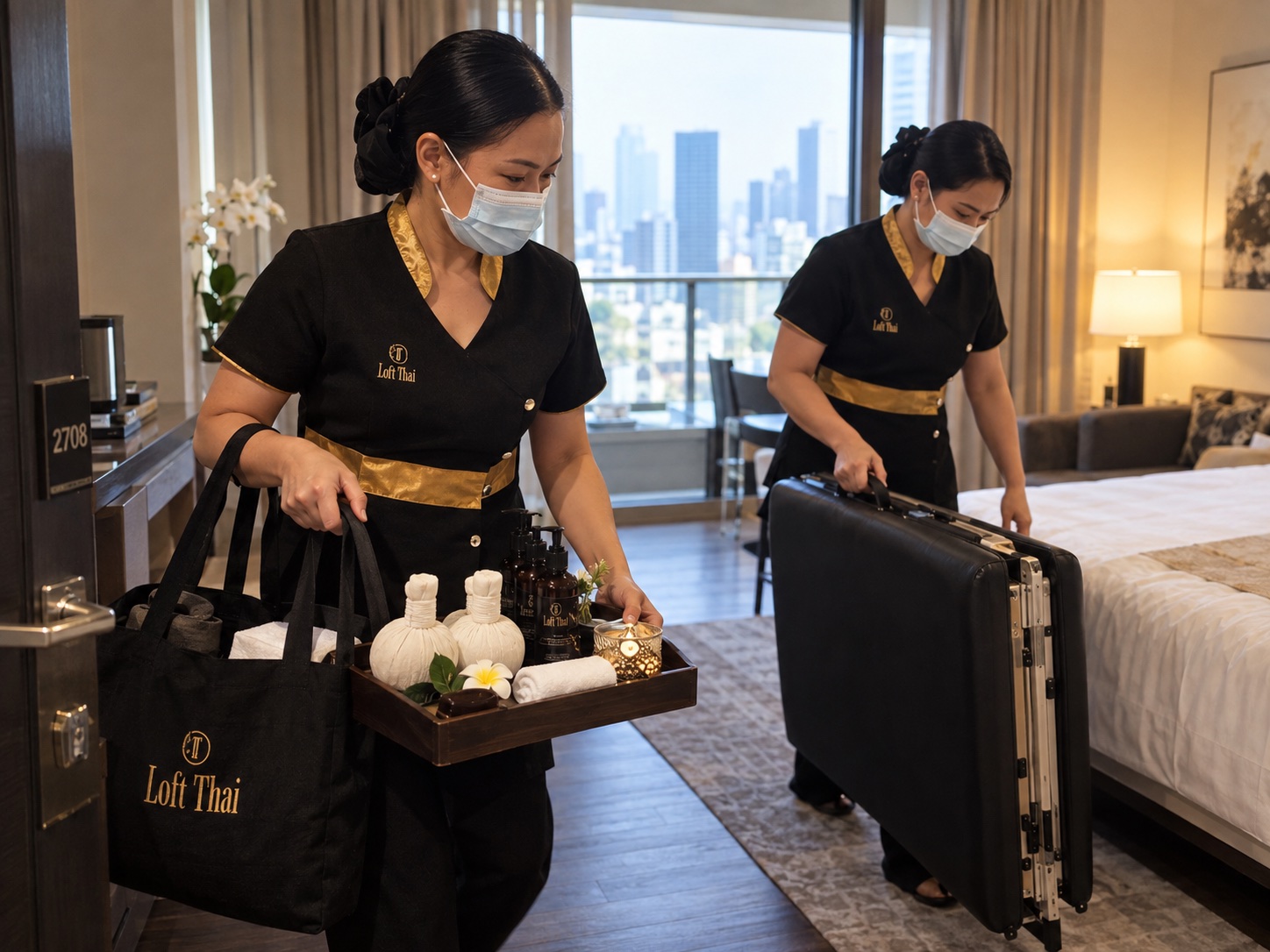
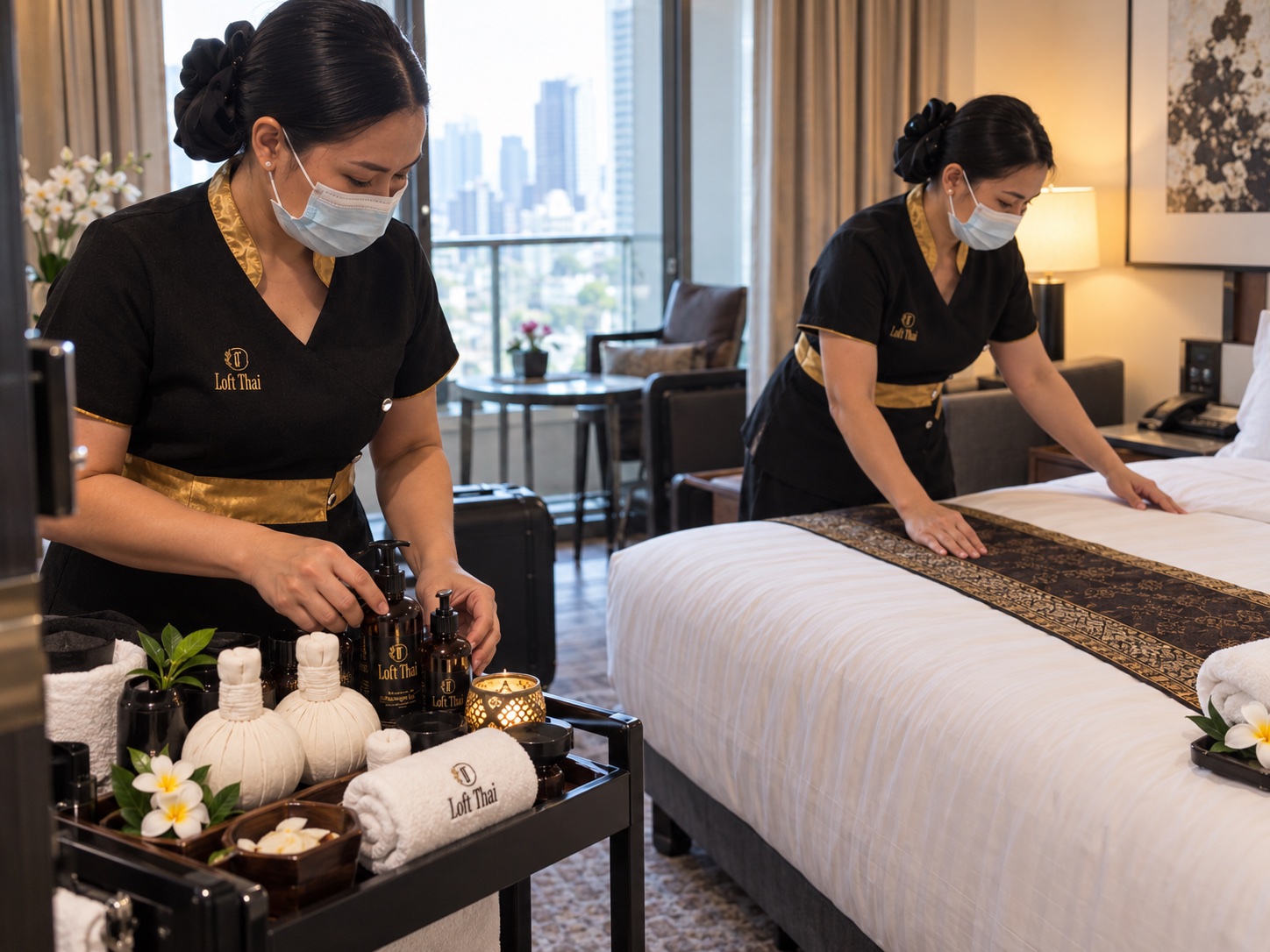
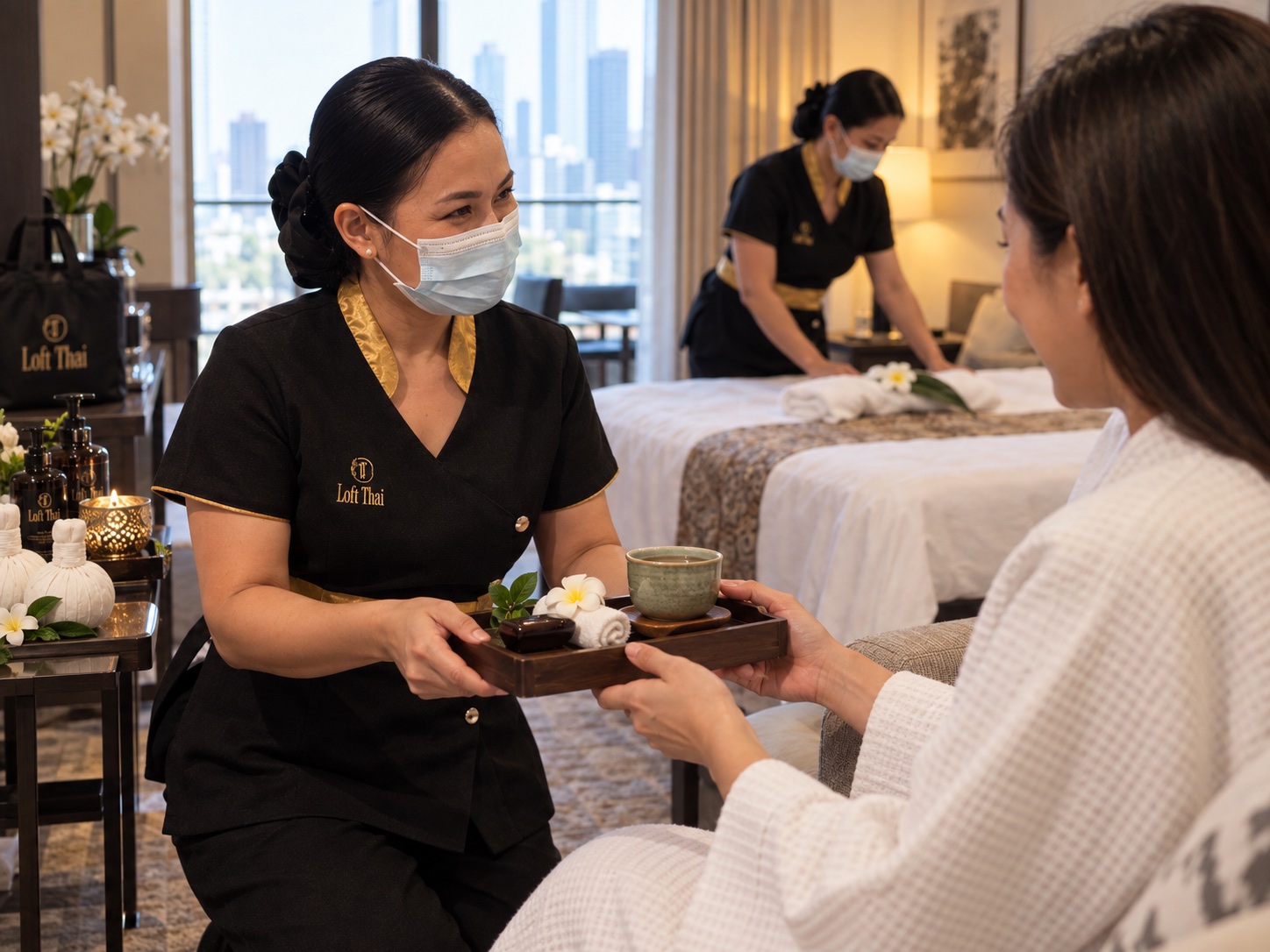
We approached setup as a complete service system. Equipment, linen, products and presentation all needed to travel together, arrive in usable condition and support the selected treatment. A mobile appointment also needed enough preparation time to create a comfortable treatment area before the hands-on session began.
The planning principle was to work backwards from each treatment. What must the team bring? What space is required? Which items need replenishing between visits? This turns packing into a repeatable preparation process. It also gives reception a practical basis for checking whether a requested service can be delivered at a particular address.
Writing protocols for an unfamiliar environment
Inside a spa, room layout and supplies are familiar. Outside it, staff need a shared sequence for assessing the setting, preparing the area, welcoming the guest and closing the visit. We helped structure the service around these transitions, so the quality of the appointment would not depend on individual improvisation.
A useful protocol makes responsibility clear. It connects the booking information to the arrival briefing, the guest's preferences to the treatment preparation, and the end of the session to clearing equipment and resetting the space. The objective is consistency without making the interaction feel scripted or impersonal.
Designing a booking journey for mobile appointments
Home and hotel services need information that an ordinary spa booking may not capture. The reservation must connect the requested treatments and timing with an address, guest contact details and access arrangements. We helped develop a dedicated booking system around those requirements, making the service easier to request and easier for the team to prepare.
The public Loft Thai home and hotel massage service allows guests to select treatments, durations and guest numbers before secure payment. It also explains that payment records a request: the team reconfirms timing, staffing, access and practical suitability before the appointment becomes final. That distinction helps set clear expectations.
Connecting external visits to the spa's reservation flow
The most important integration was organisational. Mobile bookings had to enter the continuous flow of spa reservations, giving the team a shared view of demand and staff commitments. Treating external visits as a separate diary would make it harder to understand who was available and which promises had already been made.
We helped connect the dedicated reservation process with that wider workflow. Planning an external appointment means accounting for more than treatment duration: preparation, travel, access, setup and the return journey all affect availability. This approach supports scheduling decisions that consider both the guest waiting at a hotel and the guest arriving at the spa.
Assigning the right people to each visit
Staff assignment translates a booking into a deliverable service. The relevant questions include treatment skills, the number of guests, existing appointments and the practical demands of the visit. We included assignment in the operating framework so that staffing could be considered alongside the service request, rather than left until departure.
Loft Thai's published offer specifies a two-person team: one therapist and one service assistant for a single guest, or two qualified therapists for two guests. This makes role clarity especially useful. Treatment delivery and supporting tasks must be coordinated, while requests for simultaneous sessions still require confirmation of timing and available space.
Training staff for service beyond the spa
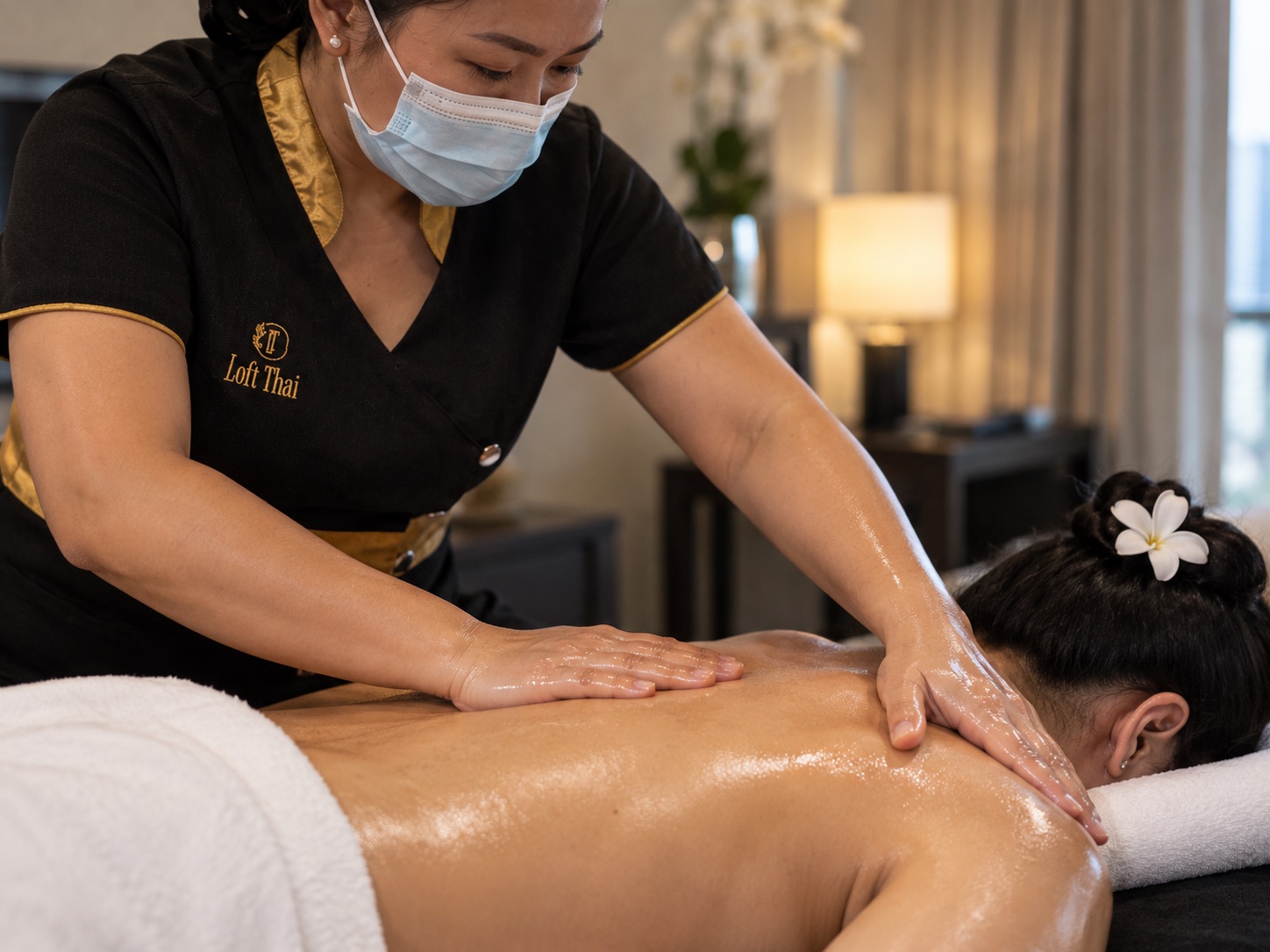
Our support also covered staff training. A therapist working outside the spa needs to carry the brand's service standards into a different setting, explain the visit clearly and coordinate with colleagues. Training therefore extends beyond massage technique to preparation, communication, professional presentation and confident handling of the appointment sequence.
The training logic follows the guest journey. Staff need to understand what was promised during booking, what to check on arrival, how to discuss preferences and when to contact the coordinator if circumstances differ from the brief. Shared expectations help the team make consistent decisions while remaining attentive to each guest.
Making hotel coordination part of the experience
A hotel visit adds another operational relationship: the property receiving the team. External therapist access, visitor registration and equipment movement can affect arrival. The booking and preparation process must allow these details to reach the people travelling to the appointment, instead of leaving them to resolve everything at reception.
For a home visit, the equivalent questions concern the address, building access and suitable treatment space. In both settings, good coordination makes the experience feel calm because practical questions have been addressed beforehand. It also gives the guest a clearer understanding of what they need to arrange before the team arrives.
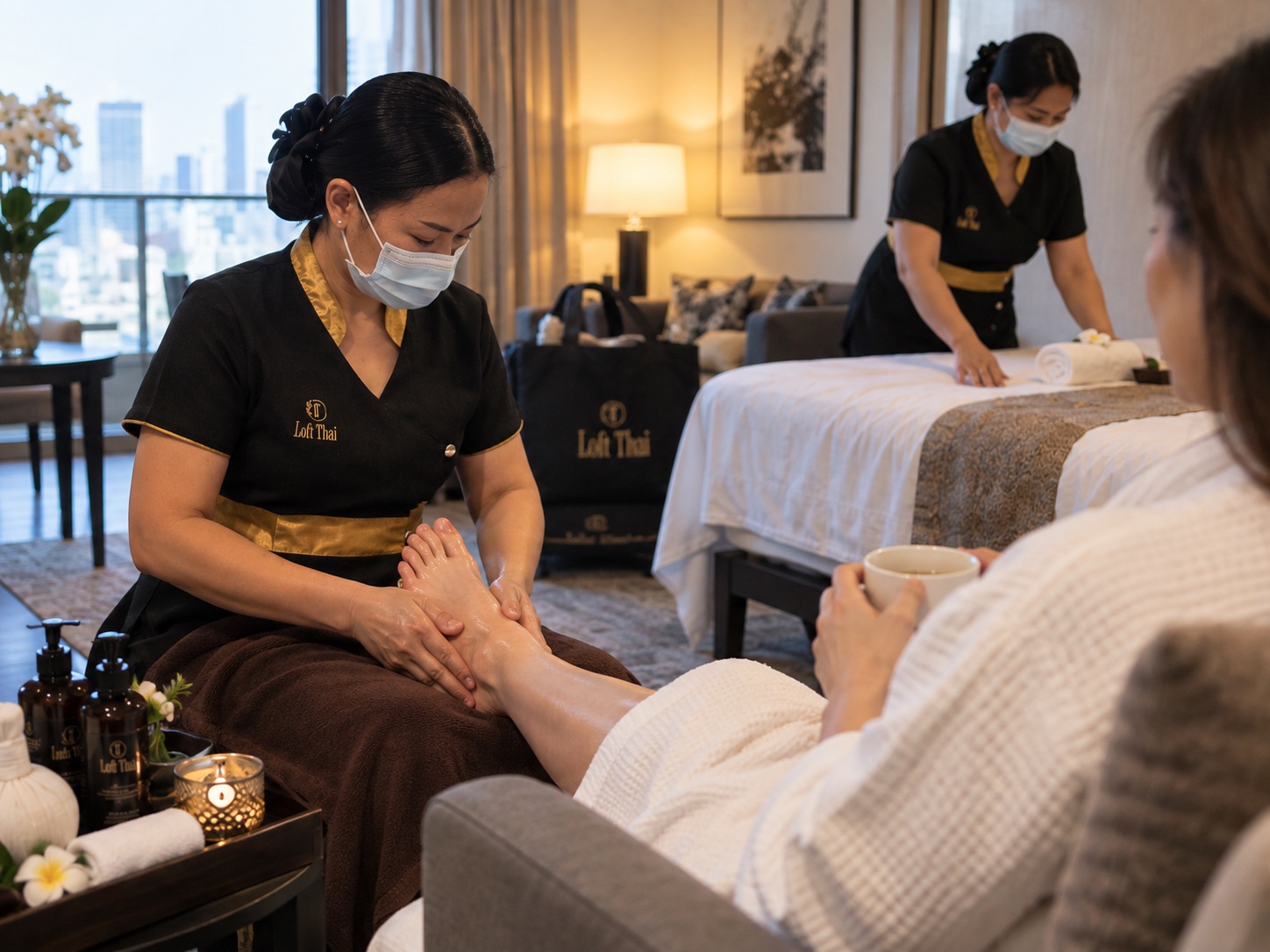
For managers considering a similar launch, the handover between reception and the travelling team deserves particular attention. Everyone should work from the same appointment details, with a clear owner for changes. If a guest changes location or requests another treatment, the implications for equipment, staff and timing need reviewing together.
The same principle applies after the visit. Returning equipment, replenishing supplies and sharing relevant feedback complete the operational cycle. These activities belong in planning because the next appointment depends on them. A mobile service becomes repeatable when preparation for the next guest starts with an orderly close to the previous visit, and when both the coordinator and service team understand their responsibilities throughout that entire cycle of preparation, delivery and return.
The value of an integrated launch
This project brought together the elements that make a new service usable in daily operations: the physical setup, service protocols, a purpose-built reservation journey, scheduling integration, staff allocation and training. Each element supports the others. A polished booking page needs an executable appointment behind it; a trained team needs a clear brief and realistic schedule.
For spa owners, the lesson is practical. Expanding into homes and hotels is a service-development project with digital, operational and human requirements. NUAD SPA's role was to help Loft Thai connect those requirements into a coherent delivery model, extending the guest experience while keeping the established spa operation central to the planning.
The next management priority is ongoing review: checking how requests move through confirmation, how preparation supports delivery and where teams need clearer guidance. This case study describes the deployment scope; it makes no claim about revenue growth, booking increases or measured efficiency gains.
Planning a home or hotel spa service? Talk to NUAD SPA about the concept, booking workflow, operating protocols and team preparation.