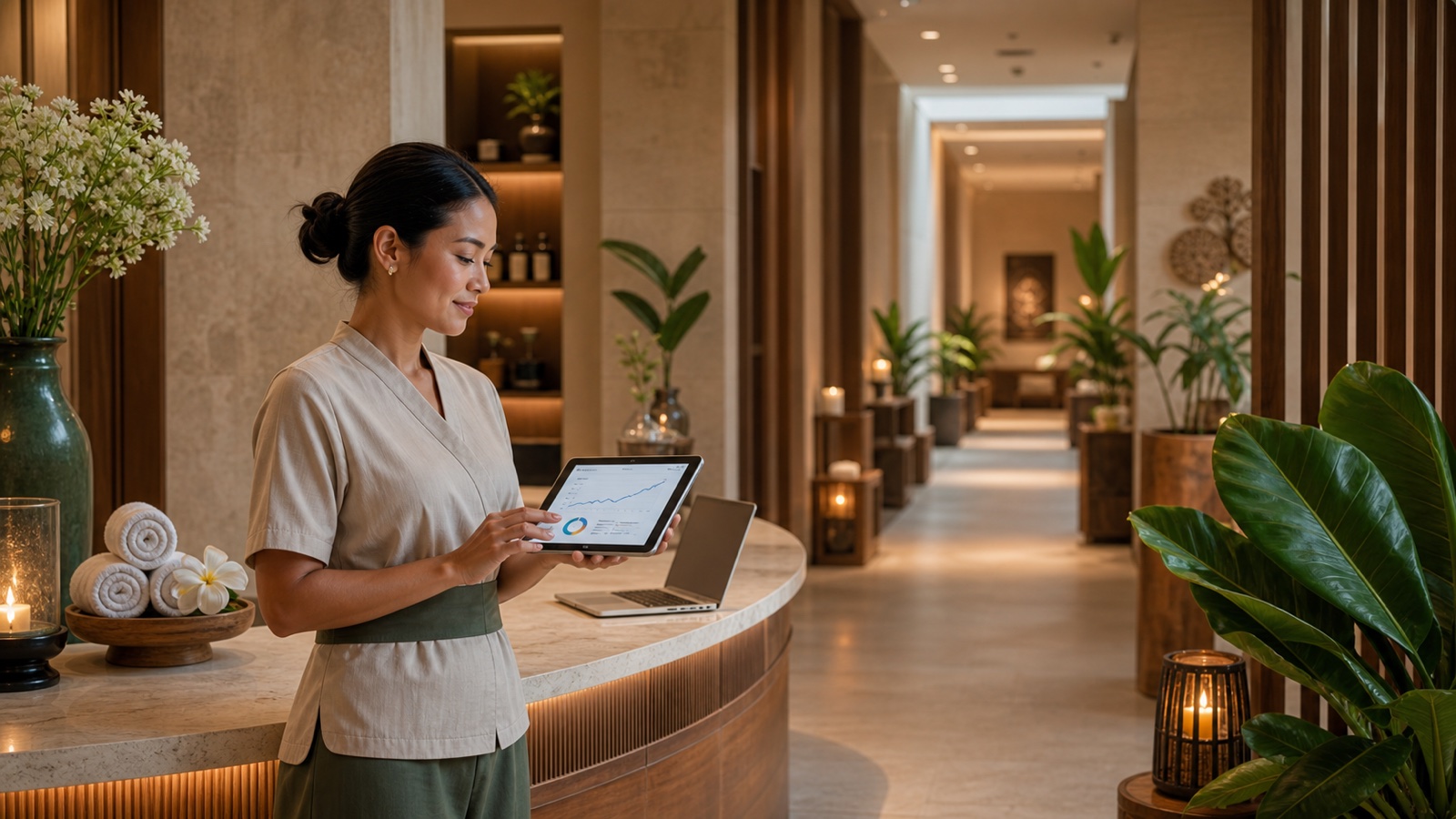
SEO for spas is not only about ranking for a few keywords. A strong spa SEO system helps potential clients discover the business, trust the experience, understand the treatments, compare the offer and take the next step toward booking. In 2026, that system needs to cover classic organic search, local search, Google Business Profile, review signals, helpful content, structured data and the new search behaviors created by AI answers.
Key takeaways
- Organic traffic becomes valuable when it attracts people who are ready to choose a treatment, compare spas or ask for a booking.
- Local SEO is the commercial center for most spas because many high-intent searches happen near a location, on maps or from mobile.
- AI search visibility depends on clear, crawlable, trustworthy and specific pages. There is no shortcut that replaces useful content and real operational proof.

Why SEO matters for spa growth
A spa can spend heavily on ads and social media, but organic visibility is the channel that keeps working when the campaign budget pauses. Search captures active intent: someone is looking for a Thai massage near a hotel, a couples spa package, a facial for sensitive skin, a pregnancy-safe massage, a luxury spa in Bangkok or a wellness retreat idea. These searches are not abstract awareness. They are questions that can become enquiries, calls, directions, gift card sales and confirmed appointments.
The mistake is treating SEO as a technical trick. For a spa, SEO is a management discipline. The website must explain the treatments clearly. The local profile must prove that the business is real and active. Reviews must reflect the service standard. Photos must help clients imagine the experience. The booking path must be easy. The content library must answer the questions that reception already hears every week. When all of those pieces support each other, the spa earns traffic that is both natural and qualified.
NUAD SPA would connect this article to the wider local search, content and review system, because the best results come from one coherent operating loop rather than isolated tactics.
Start with technical SEO foundations
Technical SEO makes the site understandable to search engines and usable for guests. Every important treatment should have a crawlable URL, a unique title tag, a useful meta description, one clear H1, descriptive headings, internal links, image alt text and a visible booking or enquiry action. A spa should avoid hiding essential content behind scripts that search engines cannot reliably render. It should also keep pages fast on mobile, because many spa searches happen while people are already moving around a city.
The architecture should be simple. Core pages usually include the homepage, location page, service category pages, individual treatment pages, packages, gift cards, about, contact and the resource library. Each service page should explain who the treatment is for, expected duration, pressure level, benefits, contraindications when relevant, aftercare and what happens during the visit. That detail helps search engines understand the page and helps clients choose with confidence.
A sitemap, clean canonical URLs and consistent internal links help discovery. Internal links should be natural and useful: a guide about spa reputation can link to review management, a Thai massage article can link to treatment training or service standards, and a business growth article can link to NUAD SPA consulting services. The goal is not to force links. The goal is to help readers move from question to action.
Build local SEO around real service areas
Local SEO is where most spas can win first. Google describes local ranking as a combination of relevance, distance and prominence. In practical terms, that means the profile and website must clearly match the search, be connected to a real location or service area and show enough trust signals to deserve attention.
The Google Business Profile should be complete: correct business name, category, address, phone number, hours, website, booking URL, service list, attributes and high-quality photos. The categories should match the real business. The service list should use words clients actually search for, such as Thai massage, aromatherapy massage, deep tissue massage, foot massage, facial, body scrub, couples package or wellness program. Opening hours must be accurate, especially around holidays and seasonal periods.
Photos matter more than many owners think. A profile with real reception, treatment room, therapist gesture, product, exterior and ambiance images feels more trustworthy than a profile filled with generic stock visuals. Reviews also matter, but the quality of review response matters too. A spa should answer reviews with calm, specific and professional replies. The reply should never expose private client information, but it should show that the business listens and manages service quality.
Location pages should be honest. Do not create fake city pages for places where the spa has no real relationship. A useful local landing page can explain access, parking, nearby hotels, neighborhood context, booking advice, popular treatments for that area and what makes the location different. For a Thailand operator, pages about Bangkok, Sukhumvit, Silom or hotel districts must be grounded in actual service reality.
Create treatment content that answers buying questions
Many spa blogs fail because they publish generic wellness articles that do not help a client decide. Strong SEO content begins with real questions. What is the difference between Thai massage and deep tissue massage? How often should a client book a facial? What should a tourist know before booking a Thai spa? Is aromatherapy suitable for stress? What package is best for couples? What should someone expect during a first visit?
Every article should have a job. Some content attracts early research, such as wellness trends or massage benefits. Some content supports comparison, such as treatment guides. Some content supports conversion, such as first-visit pages, package pages and location guides. Some content supports trust, such as case studies, team standards and reviews. This is why a resource library should link to service pages and contact routes rather than behave like a separate magazine.
The content must be original. Search engines and AI systems do not need another thin rewrite of the same treatment benefits. A spa can create stronger material by adding first-hand operational expertise: how therapists adapt pressure, how reception helps clients choose a duration, how rooms are prepared, what aftercare advice is given, how staff are trained and what mistakes clients should avoid. That specificity is difficult for a generic competitor to copy.
Use structured data carefully
Structured data helps search systems understand entities and page types, but it is not a magic ranking button. Use LocalBusiness or a more specific subtype when the information is accurate. Use Organization for the brand. Use Article or BlogPosting for editorial resources. Use FAQ structured data only when the visible page contains real questions and answers that follow current search guidelines. Mark up names, URLs, logos, images, addresses, opening hours and contact details consistently.
The most important rule is accuracy. Do not add fake ratings, fake prices, fake locations or hidden content. Structured data should describe what users can see and verify. A spa that keeps its public information consistent across the site, Google Business Profile, directory citations and social profiles gives search systems a cleaner entity to understand.
Optimize for AI search without chasing myths
AI search does not remove the need for SEO. It raises the quality bar. Search experiences that summarize answers still need reliable sources to crawl, understand and cite. For spas, AI visibility starts with the same fundamentals: helpful pages, clear entities, crawlable content, original evidence, structured organization and consistent business details.
The practical difference is format. AI systems are more likely to extract useful answers from pages that state the answer clearly, then explain the nuance. A page about local SEO for spas should define the topic, list the method, explain why it matters, give examples and connect the advice to measurement. A treatment page should not hide the answer in vague luxury language. It should make the service, location, audience, benefits and booking path explicit.
Write for entities and relationships. A spa page should make clear who the business is, where it operates, what services it provides, what type of clients it serves, which team or standards support the experience and what evidence proves credibility. Add author or organization context when useful. Link related articles together so the site becomes a coherent knowledge base. The goal is not to manipulate AI. The goal is to make the business easy to understand and safe to recommend.
Do not publish large volumes of low-quality AI text. Thin automated content creates repetition, weak expertise and brand risk. A better use of AI is to support research, outline drafts, summarize internal notes, cluster questions and find gaps. The final article still needs spa-specific judgment, operational examples, review of facts and a clear link to the business offer.
Authority, links and digital PR for spas
Links remain useful when they are earned through real relevance. A spa can earn local authority through hotel partnerships, tourism guides, wellness associations, event pages, supplier collaborations, training schools, local media, charity events and high-quality guest articles. The best links make sense even if search engines did not exist. They send qualified readers and strengthen the public footprint of the brand.
Avoid spam directories, paid link schemes and irrelevant guest posts. They can damage trust and waste time. A better plan is to create assets people can reference: a Bangkok spa guide, a massage etiquette guide, a wellness travel checklist, a local neighborhood guide, a spa opening checklist or a data-backed review of guest questions. This article can support that cluster by linking to why SEO matters for spas and to reputation-focused resources such as Google reviews and online reputation.
Measurement: connect SEO to bookings
SEO should not be judged only by traffic. The spa should track search impressions, clicks, ranking queries, indexed pages, local profile actions, calls, directions, booking clicks, form enquiries, confirmed appointments, repeat bookings and average ticket. Google Search Console shows which pages and queries are growing. Google Business Profile performance shows local actions. The booking or CRM system shows whether those actions become revenue.
A weekly review can stay simple. Which queries are increasing? Which pages attract qualified traffic? Which local actions improved? Which reviews mention high-value services? Which service page receives visits but no enquiries? Which content should be updated because the front desk hears a new question? SEO becomes stronger when marketing, reception and operations review the same signals.
Implementation checklist for spa owners
- Audit: check crawlability, mobile performance, indexation, titles, meta descriptions, headings, images, sitemap and broken links.
- Local: complete Google Business Profile, update services, add real photos, answer reviews and align NAP across citations.
- Content: build pages for treatments, locations, packages, first visit questions, comparisons, aftercare and guest concerns.
- AI visibility: write direct answers, show first-hand expertise, clarify entities, use structured data and avoid thin automated copy.
- Authority: earn local links through partnerships, events, hotel relationships, useful guides and real public references.
- Conversion: add visible booking paths, phone links, enquiry forms, treatment guidance and follow-up scripts.
Frequently asked questions
How long does SEO take for a spa?
Technical fixes and profile improvements can help quickly, but durable organic growth usually needs several months. A spa should expect a 90-day foundation phase, then continuous content, review and authority work.
Is local SEO more important than blog content?
For most spas, local SEO is the first priority because it captures nearby booking intent. Blog content becomes powerful when it supports service pages, answers real client questions and strengthens topical authority.
Can AI tools write spa SEO content?
AI tools can help with research, outlines and editing, but the final article should include real spa expertise, accurate service details, original examples and a clear business point of view.
References and further reading
- Google Search Central - SEO Starter Guide
- Google Search Central - Search Essentials
- Google Business Profile - Improve your local ranking on Google
- Google Search Central - AI features and your website
- Google Search Central - Local business structured data
Need to turn this diagnosis into an action plan? Talk to NUAD SPA.