
The best SEO trends for spas in 2026 are not cosmetic tactics. They are a deeper operating system for being understood by search engines, maps, AI answer engines and high-intent clients at the same time. A spa that wants sustainable visibility now needs clean technical access, a precise local entity, expert treatment pages, structured data, measurable authority and content that can be safely summarized by AI without losing commercial nuance.
Key takeaways
- The strongest spa SEO programs connect classic Google visibility, local search, Bing discovery, AI answers, review proof and booking conversion into one measurable system.
- The five advanced techniques are entity graph design, technical crawl control, service-intent clustering, answer-ready structured data and AI search measurement.
- The benefit is not only more traffic. The real benefit is qualified demand: clients who understand the treatment, trust the spa and can move from search to booking with less friction.
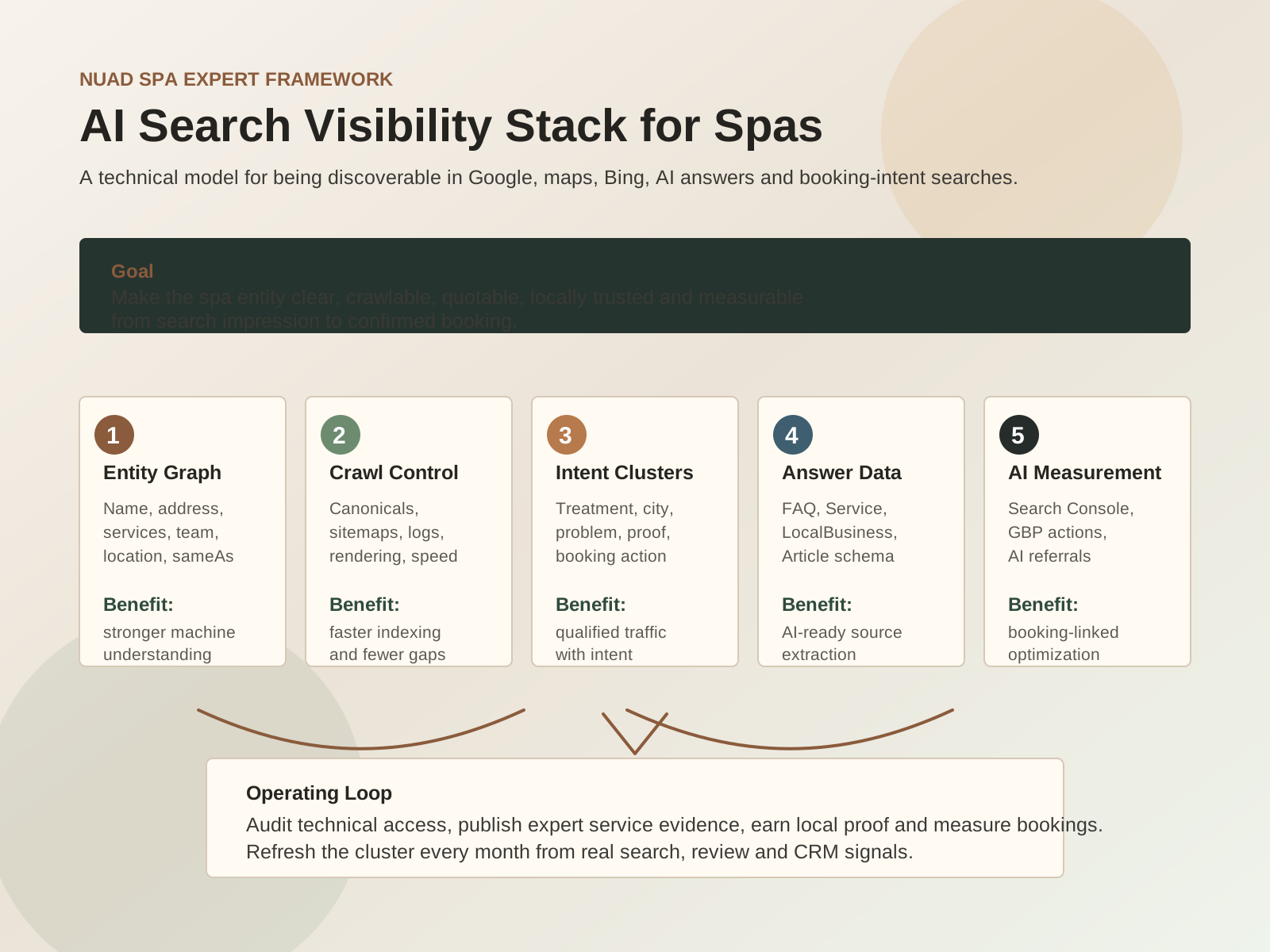
Why spa SEO has become an AI visibility discipline
Traditional SEO for spas used to mean a small set of actions: rank for "spa near me", complete the local profile, write a few treatment articles and collect reviews. Those basics still matter, but the environment has changed. A client may discover a spa through Google Search, Google Maps, Bing, Apple-style local surfaces, hotel guides, ChatGPT Search, Perplexity, AI Overviews, social search, travel content or a direct brand comparison. Search is no longer one blue-link moment. It is a network of summaries, snippets, local packs, citations, entity panels and recommendation contexts.
For spa owners, that means the website must become more than a brochure. It must be a reliable source of truth. Search engines need to understand the legal business name, location, services, treatment categories, opening hours, booking path, staff expertise, review quality, visual evidence and public reputation. AI systems need short, clear, factual passages that can be extracted without guessing. Guests need the same thing in human language: what the treatment is, who it is for, what happens during the visit, how much trust the spa deserves and how to book.
The best SEO trend, therefore, is integration. A luxury facial page, a Thai massage page, a couples spa package, a gift card page and a location page should all speak the same entity language. The local profile should confirm it. Reviews should support it. Structured data should describe it. Internal links should connect it. Measurement should reveal whether visibility becomes enquiries, calls, directions, bookings and repeat visits.
Technique 1: Build an entity-first knowledge graph
AI search systems are entity-driven. They try to understand the real-world thing behind the page: the spa brand, the branch, the service, the therapist role, the location, the category and the relationship between them. This is why entity SEO is now essential for spas. A business that is described one way on its homepage, another way on its Google Business Profile, another way in directories and another way in social bios creates unnecessary ambiguity.
The practical work begins with a canonical identity file. Define the official brand name, legal entity if relevant, main URL, logo, phone number, address, service areas, opening hours, accepted booking routes, languages, core treatments, management team, social profiles and parent or partner brands. Then make that information consistent across the site, Google Business Profile, Bing Places, maps, relevant directories, hotel partners, tourism guides and social channels.
At page level, each service should have its own entity logic. A "deep tissue massage" page is not the same as a "Thai massage" page. A "hydrating facial" page is not the same as an "anti-aging facial" page. The title, H1, intro, FAQs, schema, internal links and images should all reinforce what the service is, where it is offered, who it helps, what the guest can expect and how it connects to the spa brand. This does not mean stuffing keywords. It means removing confusion.
The benefit is machine confidence. When Google, Bing or an AI answer engine can clearly map the spa to services, location and proof, the business becomes safer to surface. For guests, the benefit is also emotional: a clear spa feels more professional before they ever enter the treatment room.
Technique 2: Control crawling, indexing and rendering like an operator
Advanced spa SEO is technical before it is editorial. If an important treatment page cannot be crawled, rendered, indexed, canonicalized or discovered through internal links, the most beautiful copy in the world will not work. The technical layer should be audited with the same discipline as a spa opening checklist.
Start with crawl paths. Every revenue-critical URL should be reachable from navigation or internal links, included in the XML sitemap, return a clean 200 status, use a self-referencing canonical when appropriate and avoid accidental noindex directives. Redirect chains should be reduced. Duplicate URLs should be consolidated. Faceted filters, old campaign URLs and translated routes should not create index noise. If the site is multilingual, hreflang must point to real equivalent pages, not generic homepages.
Rendering matters because many modern sites depend on JavaScript. Spa owners should check whether treatment descriptions, prices, booking buttons, reviews and internal links are visible in the initial HTML or reliably rendered for search engines. Lazy-loaded images should have dimensions and alt text. Core Web Vitals should be treated as user experience signals, not decorative metrics: a slow mobile service page can lose both rankings and bookings.
The complex layer is log analysis. Server logs reveal which bots crawl which pages, how often they return, where they hit errors and whether the crawl budget is being wasted on low-value URLs. For an established spa group, log files can expose a hidden problem: Googlebot may revisit old thin articles while ignoring new service pages, or AI crawlers may request only the homepage because the content architecture gives them no clear path. That is a technical management issue, not a writing issue.

Technique 3: Create service-intent clusters instead of generic blog posts
Generic wellness blogging is one of the biggest wastes in spa marketing. Search engines do not need another vague article on relaxation. A strong spa content system is built around intent clusters: service, location, problem, audience and occasion. This makes content useful for humans and extractable for AI systems.
A practical cluster might start with a core service page: "Thai Massage in Bangkok". Around it, build supporting pages that answer real decision questions: Thai massage vs deep tissue, first Thai massage etiquette, best massage after long-haul travel, massage for office neck tension, couples Thai massage, aftercare, contraindications and how to choose pressure level. Each support page should link back to the service page and to related booking or consultation routes. The same model works for facials, body scrubs, hammam rituals, prenatal massage, sleep programs and luxury spa packages.
The advanced part is mapping the funnel. Some queries are informational, some are comparative, some are local, some are transactional and some are reassurance-based. A client searching "is deep tissue massage painful" needs explanation. A client searching "best couples spa near Sukhumvit" needs location proof and booking clarity. A client asking an AI engine "which spa treatment is best after a long flight" needs a concise answer with credible reasoning. The content architecture should serve all three without mixing them into one unfocused page.
Benefits compound. Service clusters improve internal linking, topical authority, user trust and conversion. They also give reception and marketing teams reusable language. A front-desk team can send the right guide to a hesitant client. A paid campaign can land on a more relevant page. An AI system can cite a clear passage instead of summarizing a competitor.
Technique 4: Use structured data as a factual contract
Structured data is not decoration. It is a factual contract between the spa and machines. The common mistake is adding schema as a plugin afterthought, often with missing fields, fake reviews or mismatched business details. Advanced SEO treats JSON-LD as part of the content model.
For a spa, the core graph usually includes Organization, LocalBusiness or a relevant subtype, WebSite, WebPage, Service, Offer when prices or packages are public, BreadcrumbList, ImageObject, Article or BlogPosting for editorial resources and FAQPage only when the visible page truly contains those questions and answers. Each entity should have a stable @id so machines can connect the graph. The LocalBusiness entity should match the public name, URL, image, telephone, address, geo data and opening hours. The Service entities should describe real treatments, not keyword variations.
Review markup requires caution. Only mark up genuine, visible, policy-compliant reviews. Never invent aggregate ratings or hide review text. A spa that manipulates review schema is sending the wrong signal to both search engines and clients. The better approach is to earn real reviews, respond professionally and let reputation support local prominence naturally.
Answer-ready structure also matters outside JSON-LD. Put concise definitions near the top of pages. Use descriptive headings. Break complex advice into steps. Add visible FAQs where clients genuinely ask recurring questions. Explain contraindications carefully. Identify author or organization expertise when the topic touches health, safety or treatment expectations. AI systems work better when the page is explicit, but explicit does not mean simplistic. The best pages give a short answer first, then expert nuance.
Technique 5: Measure AI search, local actions and bookings together
The next major SEO trend is measurement beyond ranking. Rankings are useful, but spas need to know whether visibility creates qualified demand. A modern dashboard should connect Google Search Console, Bing Webmaster Tools, Google Business Profile performance, analytics events, call tracking where appropriate, booking engine data, CRM tags and review signals.
At minimum, track impressions, clicks, indexed pages, top queries, page engagement, booking clicks, form enquiries, phone taps, direction requests, confirmed bookings, revenue by service and repeat visits. Then add AI visibility signals: referral traffic from AI platforms when available, brand mentions in AI answers, pages cited by AI tools, questions that trigger answer summaries and crawl activity from AI bots where logs expose it.
This is where many spa campaigns fail. They report traffic while the owner cares about appointments. A page that attracts 300 visitors and five serious bookings may be more valuable than a trend article with 10,000 low-intent visits. Measurement should therefore classify pages by job: awareness, comparison, local discovery, conversion, retention or authority. Update each page according to its job.
Monthly optimization should become a rhythm. Which service queries grew? Which page is visible but not converting? Which local photos received attention? Which reviews mention treatments that deserve stronger pages? Which AI answer misrepresents the brand because the source page is vague? The best SEO teams review these questions with operations, not only marketing. For a spa, search visibility is connected to service reality.
How to integrate the system in the best way
The cleanest integration starts with a technical inventory. List every indexable page, every service, every location, every language route, every local profile, every major citation and every booking path. Then assign each page an intent, an owner, a target entity and a conversion event. This prevents the content library from becoming a pile of disconnected articles.
Next, create a schema generator or template logic rather than hand-writing JSON-LD on every page. Treatment pages should inherit service fields. Location pages should inherit address and opening-hour fields. Article pages should inherit author, date, image and breadcrumb data. The goal is not automation for its own sake; it is consistency. A structured data system that stays accurate after 100 pages is more valuable than one perfect manual page.
Then create an AI-readiness layer. Write short page summaries, maintain clean source sections, use descriptive image alt text, publish a useful sitemap, keep robots rules intentional and consider a curated llms.txt as a supplementary guide for AI crawlers. Treat llms.txt as an emerging publisher aid, not a replacement for crawlable HTML, schema or sitemaps.
Some operators will want a technical partner rather than a generic content vendor, especially when local SEO, web performance, analytics, schema and AI visibility must be joined in one implementation. In that context, Pimclick's Southeast Asia SEO analysis is a relevant reference point for spa brands operating in competitive Bangkok, Thailand or regional wellness markets.
Finally, connect the strategy to the booking desk. If reception keeps hearing the same question, publish the answer. If a treatment has margin but low visibility, build the cluster. If a page ranks but clients do not book, fix the offer, proof, images or call to action. If AI answers cite competitors, examine whether your own page is too vague, too thin or technically hard to access.
Benefits for spa owners
The first benefit is qualified visibility. A well-structured spa can appear for service, location, comparison and problem-based searches without relying entirely on paid campaigns. The second benefit is trust. Clear pages, real photos, consistent local data and thoughtful reviews make the spa feel safer before the client speaks to reception. The third benefit is conversion. When the page explains the right treatment and gives a clear next step, fewer clients abandon the journey.
The fourth benefit is resilience. Advertising costs can rise, social reach can fluctuate and platforms can change. A strong organic and AI visibility system gives the spa a durable base of demand. The fifth benefit is organizational learning. Search queries, reviews, booking data and AI answer gaps reveal what clients really care about. That insight can improve menus, packages, staff scripts, training, partnerships and product retail.
The global direction: from rankings to recommendation readiness
The future of spa SEO is recommendation readiness. A spa in Bangkok, Paris, Dubai, Tokyo, London or New York is competing to be understood as the right answer for a specific guest at a specific moment. That may be a local map result, an AI summary, a travel itinerary, a hotel concierge guide, a "best facial" search or a direct booking comparison. The winning spa will not be the one with the most generic articles. It will be the one with the clearest entity, strongest local proof, best service explanations, cleanest technical access and most disciplined measurement.
For NUAD SPA, the strategic conclusion is simple: advanced SEO is no longer separate from spa operations. It is the public layer of the business model. If the service is precise, the content should be precise. If the treatment is premium, the proof should be visible. If the brand is trustworthy, machines and humans should be able to verify it. That is how search becomes not just traffic, but booked experience.
Frequently asked questions
What is the most important SEO trend for spas in 2026?
The most important trend is entity clarity for AI and local search. The spa must be consistently understood as a real business with real services, locations, proof, pages and booking actions.
Should spas optimize differently for AI search?
Yes, but not by abandoning classic SEO. AI visibility depends on crawlable, trustworthy and specific source pages. Direct answers, structured data, clear service explanations, real expertise and consistent business details make the page easier to summarize and cite.
How many SEO pages does a spa need?
Enough pages to match real services, locations and client questions without creating thin duplicates. A focused spa may need a few strong service clusters. A multi-branch group may need a deeper architecture with location, treatment, package and editorial layers.
What should be measured first?
Start with search impressions, clicks, local profile actions, booking clicks, calls, form enquiries and confirmed bookings. Then add query clusters, indexed-page quality, AI referrals, crawl logs and review themes as the system matures.
Planning a technical SEO, AI visibility or search-led growth system for a spa brand? Talk to NUAD SPA.