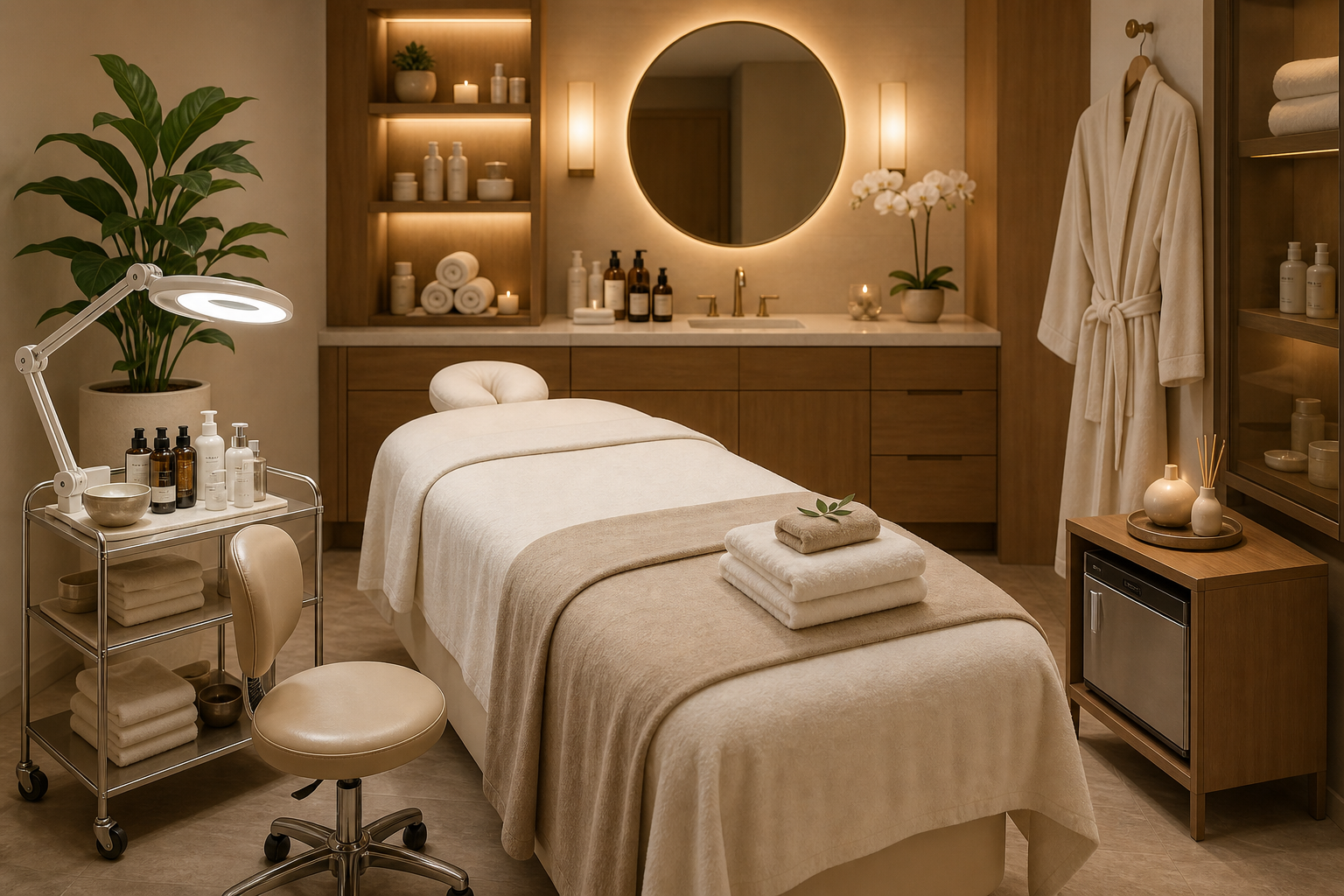
A five-star treatment room is not created by buying expensive furniture and adding candles at the end. It is created by designing a room where the client feels safe, the therapist can work without friction, hygiene is visible without feeling clinical, every tool has a place, and the sensory atmosphere supports the promise of the spa. The checklist below turns the visual reference into a practical operating standard for spa owners, managers, designers and trainers.
Key takeaways
- A luxury treatment room needs nine connected zones: core furniture, linen and comfort, thermal equipment, hygiene, facial equipment, massage essentials, ambiance, guest experience and storage operations.
- The best rooms are not the most crowded rooms. They are rooms where the therapist can reach every essential object quietly, maintain hygiene between guests, protect client modesty and keep the ritual flowing.
- Five-star quality comes from repeatable detail: opening checks, linen par levels, tool disinfection, lighting scenes, product storage, guest amenities, scent control and a clear closing procedure.

Why the treatment room matters more than the decoration
The treatment room is where the brand becomes physical. A guest may book because of a website, a recommendation or a hotel concierge, but the lasting judgment is formed in the room: the temperature, the smell of linen, the quietness of the trolley, the confidence of the therapist, the feeling of the bed, the order of the tools and the absence of awkward pauses. This is why a five-star room must be designed as both a guest experience and an operating system.
Many spas make the same mistake. They invest in reception styling, menu photography and social media visuals, then leave the treatment room to improvisation. The room may look pleasant, but towels are stored too far from the therapist, the stool does not support posture, the lamp cable crosses the movement path, hot towels are not ready, the music speaker is unreliable, or the therapist has to open drawers during the service. The guest may not name these problems, but the body feels them. Luxury depends on uninterrupted confidence.
The attached checklist is useful because it does not treat the room as a mood board. It lists the things that make a professional service possible: treatment furniture, linens, thermal equipment, hygiene, professional facial tools, oils, ambiance, beverages and storage. The real work is to connect those items into a flow. A five-star room is not a showroom. It is a small stage where care must be repeated dozens of times a day without losing precision.
Start with the room strategy before buying equipment
Before ordering a treatment bed or a facial steamer, define what the room must do. A massage-only room has different needs from a facial room, a couples suite, a post-treatment recovery room or a wet-treatment space. If the same room must serve body massage, facials, scrubs and signature rituals, it needs flexible storage and a disciplined reset process. If the room is used by several therapists, labels, par levels and tool positions become even more important because personal habits cannot be the system.
Measure the room around movement. The therapist needs access to both sides of the bed, room for a stool, space for a trolley, safe electrical points, a quiet place for used linen, a clean place for fresh linen, and enough clearance to turn without touching the guest. The client needs privacy for changing, a visible place for personal belongings, a warm robe or towel, a clear route to the bed and no sense of being watched from the corridor. The room should also protect sound. A beautiful room beside a noisy storage area will not feel five-star.
The owner should write a room brief in one page: service categories, maximum treatment duration, desired atmosphere, equipment required, cleaning rhythm, storage rules, therapist movements, utilities, safety risks and guest amenities. This brief prevents buying attractive objects that do not support the real treatment. It also helps designers understand that luxury spa design is not only about color. It is about choreography.
1. Core treatment furniture: the professional foundation
The treatment bed is the central business asset in the room. It must be stable, quiet, comfortable, easy to clean and adjustable enough for the therapist to work without strain. A premium electric spa bed is usually worth the investment because height adjustment protects the therapist's back and allows different treatments to be performed at the right level. If the spa offers facials, body treatments and massage in the same room, the bed should support incline positions, face cradle comfort and easy linen changes.
The therapist stool matters more than many owners expect. A poor stool causes shoulder tension, poor posture and uneven facial technique. Choose a stool with smooth wheels, height adjustment, back support when appropriate and upholstery that can be cleaned properly. It should move quietly and fit under the work zone without hitting the trolley. The goal is not to make the therapist sit all the time; it is to allow precision work without physical fatigue.
A treatment trolley should be lockable or at least professionally organized. Drawers protect tools from visual clutter, dust and accidental contact. The top level should carry only the objects needed for the current protocol. The lower levels can hold backup towels, bowls, brushes or disposables. Avoid turning the trolley into a miniature warehouse. Five-star service requires the therapist to prepare the trolley before the guest arrives, not search for products during the treatment.
Storage cabinetry, a mirror, a magnifying LED lamp and adjustable treatment lighting complete the furniture zone. The mirror supports consultation and post-treatment presentation. The lamp must be positioned for precision without shining harshly into the guest's eyes. Lighting should have at least two scenes: preparation and treatment. Preparation light lets the therapist inspect the room, clean surfaces and read product labels. Treatment light lowers intensity while keeping enough visibility for safe work.
2. Linen and comfort: where luxury becomes tactile
Linen is one of the fastest ways a client recognizes quality. High-quality bed linens, warm blankets, soft throws, bolsters, face cradle cushions, bath towels, hand towels, robes and slippers all communicate care before the treatment begins. But linen quality is not only softness. It is weight, absorbency, smell, folding method, storage cleanliness, replacement timing and the ability to keep the client warm without overheating the room.
The face cradle cushion deserves special attention. Many guests remember discomfort in the face cradle more than the massage itself. A memory foam cushion, clean cover and correct alignment reduce pressure on the cheeks, eyes and jaw. For longer body treatments, bolsters for knees, ankles and lumbar support protect the guest from small discomforts that accumulate over time. A five-star therapist asks about comfort early, then adjusts before the guest has to complain.
Create linen par levels for each room. For example, one prepared bed set, one immediate backup set, one robe, one pair of slippers, several hand towels, several face towels, a floor towel if relevant and enough small towels for hot or cold applications. The exact number depends on the menu and laundry rhythm. The key is that the therapist should not leave the room to find basics during a normal service day.

3. Hot towel and thermal equipment: comfort with control
Hot towels can elevate a simple treatment when they are ready at the right moment, safe in temperature and handled elegantly. A professional hot towel warmer, heated towel rack, hot stone heater or herbal compress warmer must be selected according to the menu. Do not buy thermal equipment because it looks luxurious. Buy it because the treatment protocol needs heat, and then train the team to use heat safely.
Thermal comfort is sensitive. A towel that is too cool feels careless. A towel that is too hot can harm the guest. Hot stones and herbal compresses require clear temperature checks, contraindication awareness and a safe holding technique. The therapist should test heat before contact and ask for feedback. In a high-end spa, the guest should feel warmth as a precise gesture, not as a surprise.
Thermal tools also create operational responsibilities. The team needs cleaning rules, end-of-day emptying or drying procedures, safe electrical placement and a system for separating clean and used items. Heat can make a room feel generous, but poorly managed heat creates risk. The best spa rooms make thermal comfort feel effortless because the preparation is disciplined.
4. Hygiene and sanitation: visible trust without clinical coldness
Hygiene must be both real and reassuring. A clinical-grade hand sanitizer station, antibacterial hand wash, surface disinfectant, tool sterilization system, UV sterilizer cabinet when appropriate, covered waste bin, laundry hamper with lid, disposable gloves, disposable spatulas, facial tissues and first aid kit all belong in the room or immediately nearby. However, they should be integrated with taste. A guest should sense cleanliness without feeling they entered a laboratory.
The most important hygiene rule is separation. Fresh linen must never touch used linen. Clean tools must never share a tray with used tools. Products applied to the skin should not be contaminated by fingers or double dipping. Disposable spatulas, washable bowls and clear waste habits protect both guest and staff. If extractions or facial tools are used, cleaning and sterilization must follow the manufacturer's instructions and local regulations.
A five-star room also needs a reset checklist between guests. The therapist or attendant should remove used linen, disinfect contact surfaces, replace towels, empty waste if needed, reset product positions, check floor cleanliness, refresh water or tea items, confirm temperature and inspect the bed. The reset is part of the treatment, even though the guest does not see it. Without reset discipline, the first client of the day receives the brand promise and the last client receives fatigue.
5. Professional facial equipment: technology with judgment
Facial equipment should support the therapist, not dominate the room. A facial steamer with ozone function, LED therapy system, ultrasonic skin scrubber, high-frequency machine, extraction tools, professional bowls, brushes and mask application tools can all be valuable when they match the service menu. The danger is building a room that looks impressive but confuses the guest and slows the therapist.
Each device should have a reason, a contraindication note, a cleaning procedure, a storage position and a training standard. The facial steamer needs safe placement so steam reaches the skin without crowding the guest's face. LED should be explained simply: what it is used for, how long it will last and what the guest will feel. Ultrasonic or high-frequency tools should be handled by trained staff who understand skin sensitivity. Tools are only premium when the team can use them calmly and explain them honestly.
Bowls, brushes and mask tools seem small, but they affect perceived professionalism. Ceramic or stainless bowls feel better than random plastic containers. Brushes should be clean, soft and appropriate for the product texture. Extraction tools must be treated with extra discipline. If a spa cannot maintain proper sanitation and training, it should reduce the technical menu rather than risk the guest's skin.

6. Massage and body treatment essentials: prepare the ritual, not only the product
Massage oils, body lotions, creams, aromatherapy essential oils, hot stones, body wraps and treatment blankets should be chosen for performance and guest tolerance. A beautiful amber bottle is not enough. The oil must have the right glide, the lotion must suit the climate, the scent must not overpower the room, and the therapist must know what to use for different skin types, allergies and treatment goals.
Aromatherapy needs restraint. A signature fragrance can create memory, but strong scent can also cause discomfort. Keep essential oils properly stored, labeled internally and used with contraindication awareness. The guest should be asked about fragrance preference before a strong aromatic treatment. Luxury is not forcing the brand scent on every person; luxury is offering a controlled sensory choice.
Body wraps and treatment blankets require careful sequencing. The room must be warm enough, the products must be ready, and the therapist must protect modesty while moving efficiently. The client should never feel abandoned inside a wrap. A timer, quiet check-in rhythm and accessible call method help the service feel safe. For premium rituals, the room should support the whole arc: arrival, explanation, application, warmth, removal, hydration and slow re-entry.
7. Luxury ambiance: sensory design with operational discipline
Ambiance includes dimmable warm lighting, indirect ambient lighting, an aromatherapy diffuser, professional sound system, curated spa music, artwork, decor, scent branding and blackout curtains or privacy blinds. These elements create the emotional layer of the room. But the best ambiance is never random. It is programmed, maintained and matched to the treatment.
Lighting should help the client relax while allowing the therapist to work safely. Music should be reliable and free of sudden volume changes, ads or distracting vocals unless the concept intentionally uses them. Artwork should support the brand rather than steal attention. Curtains and blinds should protect privacy and control daylight. Candles can be beautiful, but many spas should use safer alternatives or strict flame rules depending on building policy and ventilation.
Sound deserves special planning. A treatment room can be visually perfect and still fail if the guest hears staff conversation, laundry, street noise or reception phones. Soft materials, door seals, speaker placement and staff behavior all matter. Five-star ambiance is partly architecture and partly etiquette. The therapist's voice, pace and movement must match the room.
8. Beverage and guest experience: small details that extend the treatment
An infused water station, herbal tea selection, elegant serving tray, glassware or premium disposable cups and client amenities basket can turn the room from functional to memorable. These items are not about feeding the guest. They signal hospitality and help the client transition before or after the treatment. A sip of warm tea after a massage can make the experience feel complete.
Guest amenities should solve real needs: hair ties, cotton pads, tissues, makeup remover wipes, small towels and perhaps a discreet mirror. Keep them clean, stocked and easy to replace. Avoid overloading the basket with random items. The best amenities feel thoughtful because they answer the guest's next need before the guest asks.
Beverage service also needs rules. Water should be fresh. Glasses should be clean. Tea should be prepared at the right time. The tray should not sit beside used tools or laundry. If the spa serves guests inside the treatment room, the team must maintain separation between service items and treatment items. Hospitality is warm, but it still needs hygiene logic.
9. Storage and operations: the invisible side of luxury
Lockable product cabinets, retail display shelving, linen storage cabinets, product refrigerators and inventory management systems make the room sustainable. Without storage discipline, luxury becomes clutter. Products expire, towels disappear, devices break, staff improvise and the room slowly loses its standard. The guest may still see a candle and a bed, but the operation is no longer five-star.
Every product should have a position, a par level and a replacement trigger. High-value products need lockable storage. Heat-sensitive products may need refrigeration. Retail shelves should be intentional and clean, not a leftover corner of stock. Linen storage should be closed or beautifully folded if visible. The product refrigerator should be quiet, clean and appropriate for the room design.
An inventory system does not have to be complicated. A small spa can start with a weekly count sheet and reorder thresholds. A larger spa should use software or a shared stock system. The goal is to prevent therapist stress and owner leakage. Running out of clean face towels during a full day is an experience problem. Losing expensive serum stock is a profit problem. Storage solves both.
Implementation plan: from checklist to five-star standard
Use the checklist in three passes. The first pass is physical: walk into the room with fresh eyes and mark what is missing, broken, noisy, too far away or visually messy. The second pass is operational: observe a therapist preparing the room, performing a service and resetting it. Note every unnecessary movement, delay or search. The third pass is managerial: assign owners, par levels, cleaning rhythms, replacement budgets and training notes.
Then create a room standard sheet. It should include a morning opening checklist, before-guest setup, treatment-specific trolley setup, between-guest reset, closing checklist and monthly maintenance review. Photograph the correct room setup so new staff can see the standard. Keep the sheet short enough to use daily. A ten-page manual nobody reads is less valuable than one clear page beside a well-trained team.
Budget in phases if needed. Start with safety, hygiene and therapist ergonomics. Then improve linen quality, lighting and storage. Then add advanced facial equipment, beverage service, scent strategy and decorative refinement. This order protects the guest and the team first. A spa should never buy an LED mask before it has a clean towel system, a stable bed and a real disinfection protocol.
The final test is repeatability. Can the room feel ready at 10:00 in the morning and 8:00 at night? Can two therapists use it with the same standard? Can the manager inspect it in three minutes? Can the guest understand the quality without seeing clutter? When the answer is yes, the room has moved beyond decoration into professional luxury.
Common mistakes to avoid
The first mistake is overfilling the room. A five-star room needs generous calm. Too many products, devices, baskets, candles and decorative objects make the therapist slower and the guest less relaxed. The second mistake is hiding hygiene so completely that the guest cannot sense cleanliness. Hand hygiene, fresh linen and organized tools should be discreetly visible.
The third mistake is forgetting therapist ergonomics. A room that photographs beautifully but damages the therapist's back will not deliver consistent service. The fourth mistake is buying equipment without training. A device is not a luxury signal if staff are nervous using it. The fifth mistake is ignoring maintenance. A stained robe, noisy wheel, half-empty diffuser or dusty shelf weakens the entire brand promise.
Frequently asked questions
What is the first priority when upgrading a spa treatment room?
Start with safety, hygiene, guest comfort and therapist ergonomics. Upgrade the treatment bed, linen system, disinfection process, storage logic and room reset checklist before investing in decorative objects or advanced devices.
How many towels and linens should a treatment room hold?
The exact number depends on the treatment menu and laundry rhythm, but each room should hold one fully prepared setup, one immediate backup setup and enough face, hand and body towels for the next service without forcing the therapist to leave the room.
Should a five-star room show all facial devices?
No. Show only what supports the current service and store the rest neatly. Visible equipment should make the room feel professional, not crowded. The therapist should prepare the relevant tools before the guest arrives.
How can a small spa create a luxury room without a large budget?
Focus on cleanliness, warmth, linen quality, quiet movement, lighting control, scent restraint and a disciplined reset process. Small rooms can feel five-star when every item is intentional and the service flow is calm.
Planning a treatment room, spa opening or operational upgrade? Talk to NUAD SPA.