Staff Recruitment consulting for spa operators
Recruit the right spa team before poor hiring choices become a guest-experience problem.
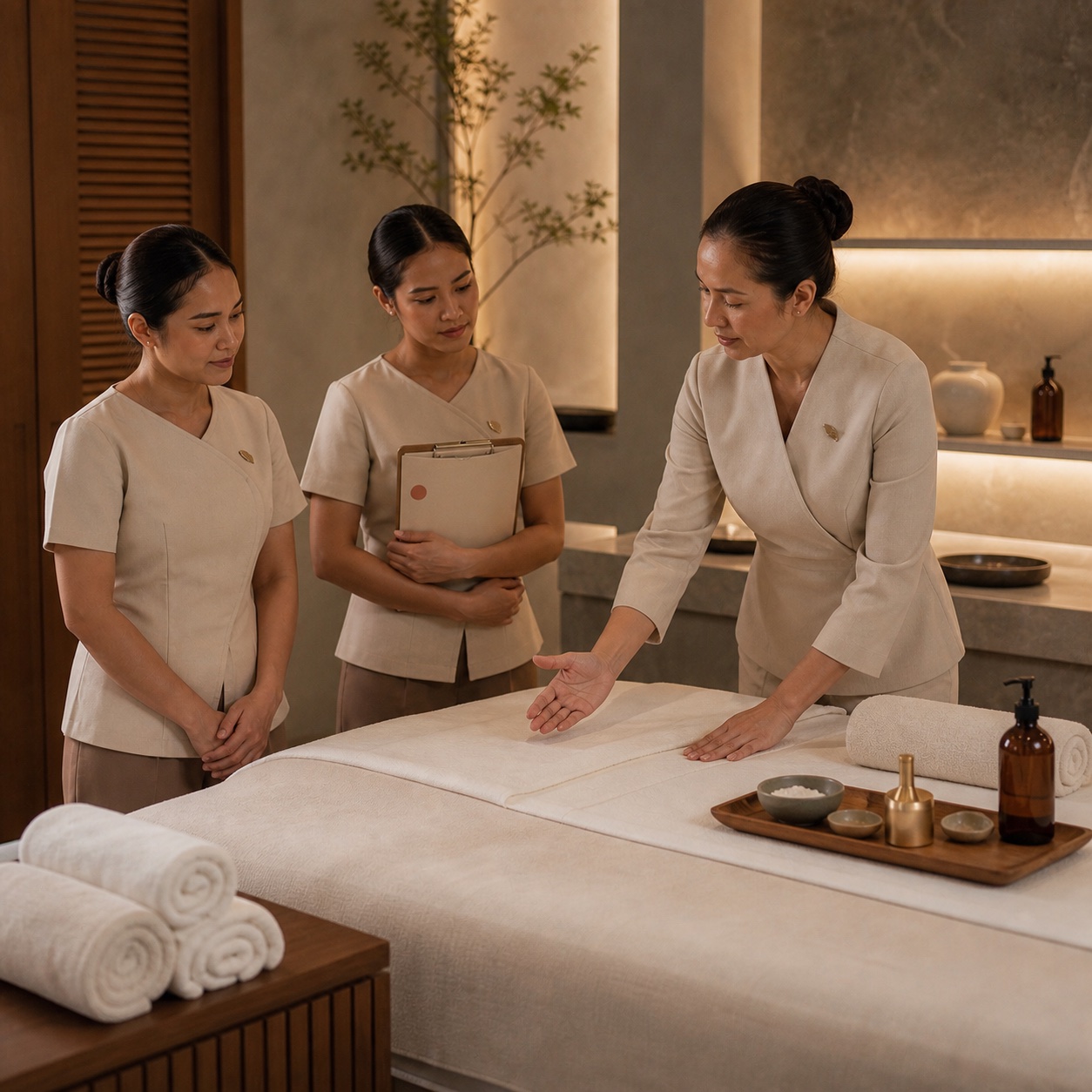
from role design to first-week readiness
Staff Recruitment defines the roles, profile, selection process and onboarding path for spa employees.
We help write role needs, screen candidates, test technique or service instinct, structure interviews and align hiring with the concept, salary model and launch schedule.
For NUAD SPA, this service is never isolated. It is connected to the spa concept, the treatment menu, the staff behavior, the public promise and the owner's commercial reality. The goal is a service system that feels premium to guests and practical to run.
Useful outputs, not decorative documents.
How we handle Staff Recruitment.
Our qualities for this service.
We know how the recommendation will feel at reception, in the treatment room and in the manager meeting.
Every decision is tied to the guest path, price logic, margin, capacity or repeat-booking behavior.
The work respects the quiet, material and sensory codes that make a spa feel considered rather than generic.
We turn strategy into documents, assets, routines and training points that can be used by the team.
Staff Recruitment in practice.
Realistic project scenes showing how this sub-service becomes consulting work, team tools, guest-facing assets and operational decisions.
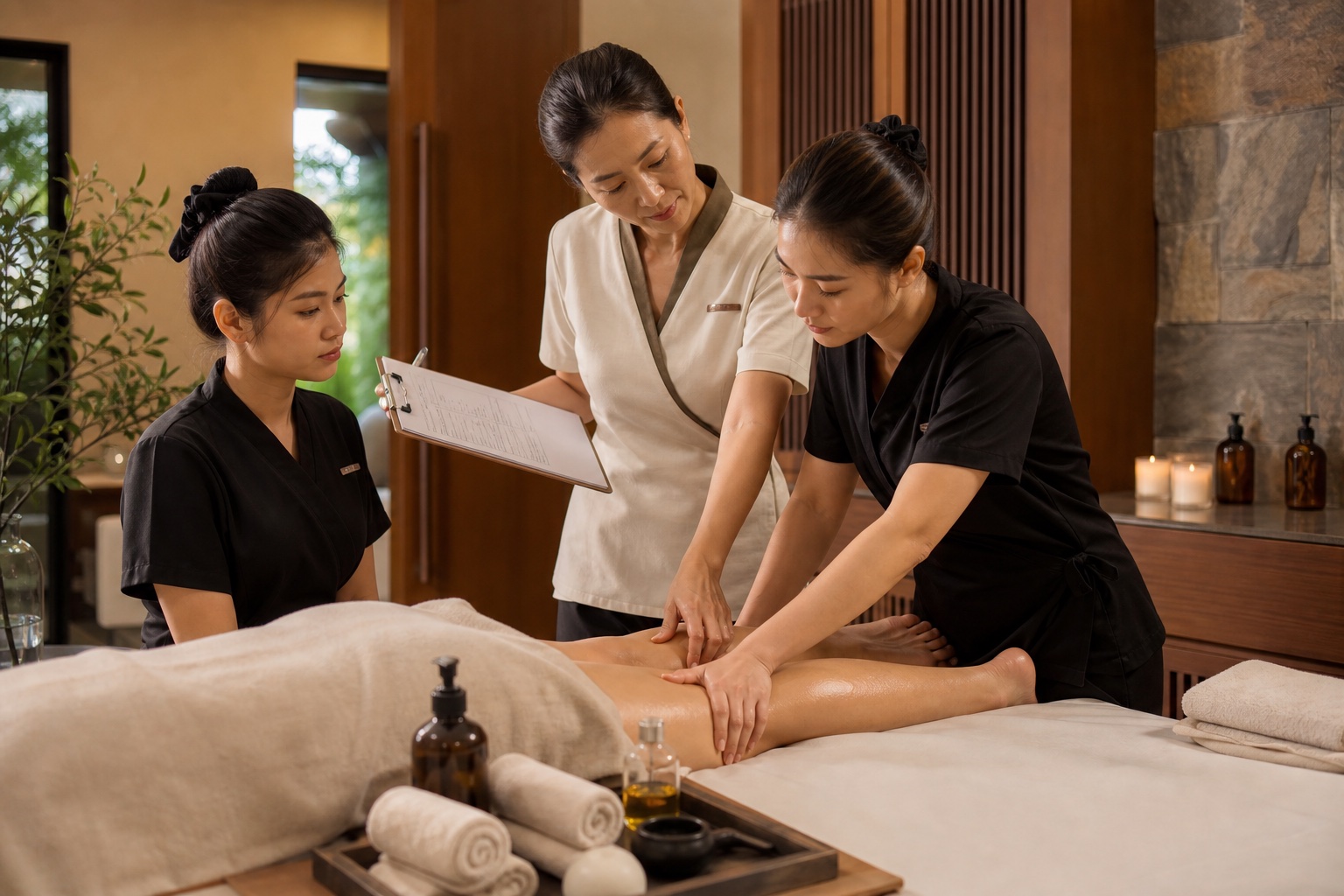

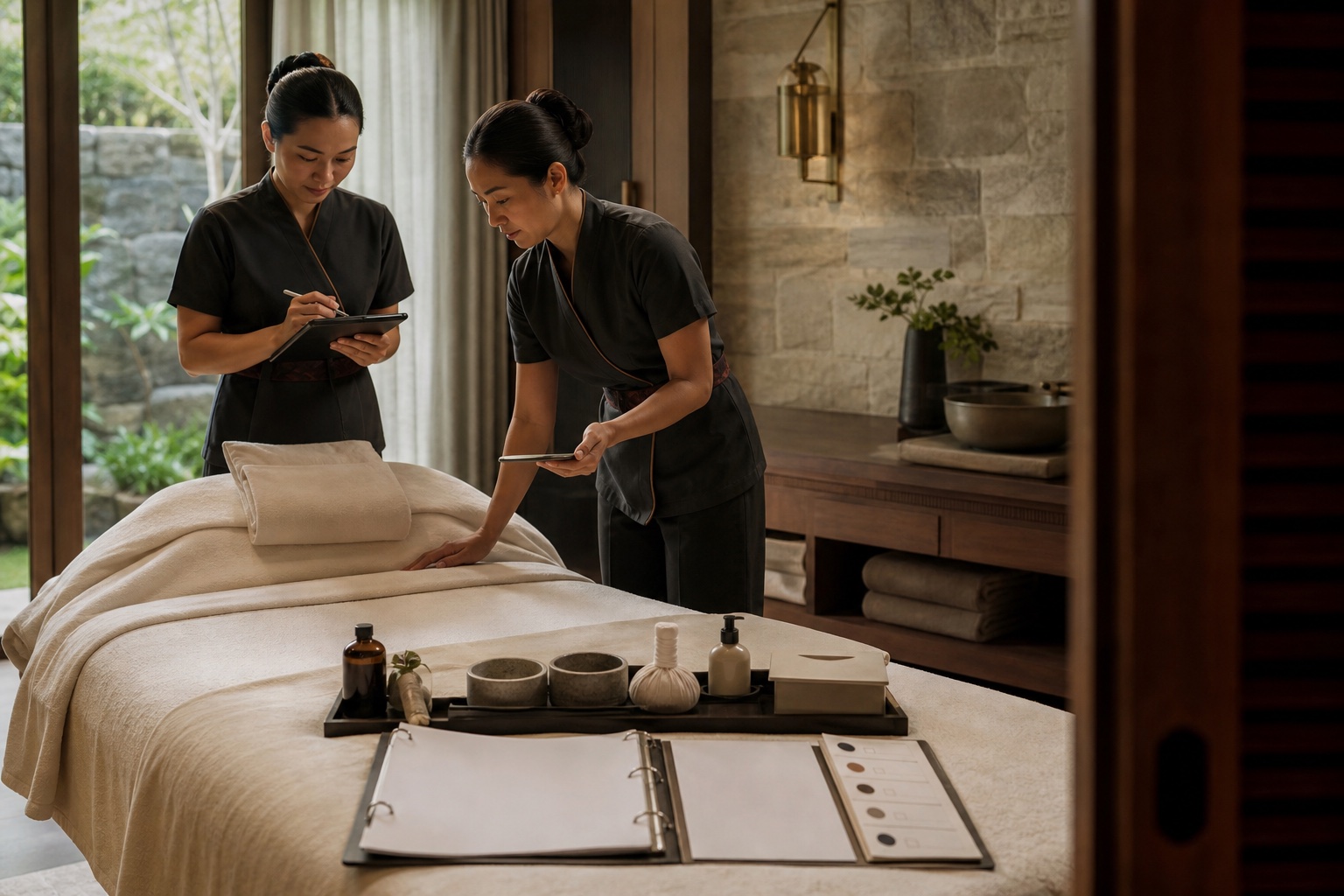

How this service shows up in real spa projects.
A niche wellness concept needs staff who can make the offer feel comfortable and clear to first-time guests.
Recruitment criteria focus on service instinct, practical technique and communication fit, not only availability.
A launch timeline can pressure owners into hiring quickly before roles and standards are clear.
The recruitment work defines role profiles, assessment moments and onboarding so the first week is calmer.
A growing operator needs a candidate pipeline that can support more than one branch.
Scorecards and probation rhythms help managers compare candidates fairly and train faster after hire.
Useful internal reading for this service.
How Diagnose, Design, Build and Grow structure every engagement.
A practical launch case study with concept, operations and opening work.
A useful reference for service consistency and repeat booking.
A resource on team preparation before launch.
A resource on offer design and menu logic.
Questions clients ask before starting.
What does Staff Recruitment include? +
Staff Recruitment includes the strategy, practical decisions and production guidance required to move from a vague intention to a working spa asset. In this engagement we start with the business role of the service: who it must persuade, what problem it must solve, and how it should support the wider Operations pillar. Then we translate that into concrete deliverables such as role profiles, candidate scorecards, interview structure, practical test format, salary and rota notes. The important point is that we do not treat the work as a decorative layer. A spa service has to live in the treatment room, at reception, inside the booking flow and in the way therapists or managers speak to guests. We therefore connect the creative choices to pricing, timing, staffing, guest expectation and daily operations. The final output is designed for use: owners can make decisions, managers can brief teams, suppliers can execute the direction and marketing can explain the offer without inventing a second story. During delivery, we also mark what the client can do immediately, what should wait, and what must be measured after launch. That discipline keeps the recommendation practical: the spa team knows the next action, the owner knows the risk, suppliers receive clearer instructions, and the project avoids the expensive gap between good intention and daily execution.
When should a spa invest in this service? +
The best moment to invest in Staff Recruitment is before hiring fast but not hiring for the actual concept becomes expensive or visible to guests. For a new spa, that usually means during concept, pre-opening or supplier selection, when decisions are still flexible and the operating model can be shaped without undoing finished work. For an existing spa, the right moment is when performance shows friction: guests do not understand the offer, team delivery depends on individual personalities, retail or packages feel weak, content does not create bookings, or managers cannot explain why results vary from week to week. We also recommend this service before a relaunch, renovation, new branch, new treatment menu, hotel partnership or campaign. That timing gives the work enough influence to improve decisions rather than only tidy up symptoms. A serious spa should not wait until reviews, payroll pressure or empty rooms expose the issue. Done early, Staff Recruitment gives the project a calmer path and protects the investment already being made. During delivery, we also mark what the client can do immediately, what should wait, and what must be measured after launch. That discipline keeps the recommendation practical: the spa team knows the next action, the owner knows the risk, suppliers receive clearer instructions, and the project avoids the expensive gap between good intention and daily execution.
How is NUAD SPA different from a normal consultant or agency? +
NUAD SPA works from operator reality first. We are not interested in creating a polished document that looks impressive but cannot be used on a busy Saturday. For Staff Recruitment, our advantage is that we understand how a spa actually earns trust: the guest arrives with tension or expectation, the team has limited time, the treatment room has constraints, and the manager needs standards that survive turnover. That changes the work. We ask whether the recommendation can be trained, priced, photographed, booked, repeated and inspected. We also connect the service to neighboring disciplines such as SOP, Staff Training, International Therapist Recruitment when the project needs them. A normal supplier may solve one visible piece; we look at the system around it. The result is usually more precise, more commercially useful and less fragile. Clients use us when they want the taste level of a premium brand partner with the practical judgment of people who have run spa operations. During delivery, we also mark what the client can do immediately, what should wait, and what must be measured after launch. That discipline keeps the recommendation practical: the spa team knows the next action, the owner knows the risk, suppliers receive clearer instructions, and the project avoids the expensive gap between good intention and daily execution.
What information do you need before starting? +
We can begin Staff Recruitment with a short but serious discovery pack. Ideally we review the current concept, location, target guest, treatment menu, price list, booking data, team structure, supplier list, existing visuals, reviews and any financial assumptions that are safe to share. For a new project, architectural plans, mood references, investment range, planned facilities, launch timing and owner ambition are useful. For an existing spa, we like to see the public website, social channels, booking flow, recent guest feedback, monthly performance patterns and the materials used by reception or therapists. We do not need every document to be perfect before starting. In fact, gaps are often revealing. The discovery process helps us see what is clear, what is assumed and what still lives only in someone's head. From there we can define a focused scope, decide which decisions are urgent and avoid producing recommendations that ignore the operational facts. During delivery, we also mark what the client can do immediately, what should wait, and what must be measured after launch. That discipline keeps the recommendation practical: the spa team knows the next action, the owner knows the risk, suppliers receive clearer instructions, and the project avoids the expensive gap between good intention and daily execution.
How long does the work usually take? +
The timeline for Staff Recruitment depends on scope, number of stakeholders and how much source material already exists. A focused advisory sprint can often produce a useful direction in one to two weeks, especially when the spa needs a decision on a narrow issue. A deeper engagement with research, supplier briefs, team workshops, menu logic, production assets or implementation support is usually closer to four to eight weeks. Pre-opening projects can run longer because the work must coordinate with architecture, recruitment, training, procurement and launch marketing. We prefer to set milestones rather than pretend every spa needs the same calendar. A good rhythm is discovery, first recommendation, working review, production handoff and implementation check. This gives the owner enough visibility to make decisions without slowing the project. When speed matters, we prioritize the decisions that unlock action first, then refine secondary details after the core direction is safe. During delivery, we also mark what the client can do immediately, what should wait, and what must be measured after launch. That discipline keeps the recommendation practical: the spa team knows the next action, the owner knows the risk, suppliers receive clearer instructions, and the project avoids the expensive gap between good intention and daily execution.
Can this service be combined with other NUAD SPA services? +
Yes. Staff Recruitment is often strongest when combined with related services because spa problems rarely live in one department. A menu issue may also be a training issue. A product line may need art direction, retail pricing and therapist scripting. A booking problem may involve the website, offer structure, CRM and staff behavior at checkout. For this service, the most natural companions are SOP, Staff Training, International Therapist Recruitment, but we adapt the combination to the business problem rather than forcing a package. The benefit of combining services is continuity. The same strategic thread can move from concept to operations to marketing without being reinterpreted by five separate suppliers. That usually saves time, reduces contradictions and makes the final experience feel more coherent to guests. We can still work on a single service when the scope is clear. The difference is that we will always point out the adjacent decisions that could weaken the result if ignored. During delivery, we also mark what the client can do immediately, what should wait, and what must be measured after launch. That discipline keeps the recommendation practical: the spa team knows the next action, the owner knows the risk, suppliers receive clearer instructions, and the project avoids the expensive gap between good intention and daily execution.
How do you adapt the service to a luxury hotel, day spa or boutique concept? +
We adapt Staff Recruitment by starting with the guest promise and business model, not with a fixed style. A luxury hotel spa needs discretion, international clarity, premium pacing and strong alignment with rooms, concierge and F&B expectations. A day spa needs faster explanation, repeat booking logic, efficient room turnover and clear value for local guests. A boutique concept often needs sharper personality, a memorable ritual, strong visual language and a community or neighborhood reason to return. The same method can serve all three, but the recommendations change. Pricing, training depth, collateral, imagery, supplier choices and operational tolerance are different. We also study what the guest is comparing you against. A traveler in a five-star hotel, a local client booking after work and a wellness enthusiast seeking a specialty ritual do not need the same cues. Good consulting respects those differences while keeping the service disciplined. During delivery, we also mark what the client can do immediately, what should wait, and what must be measured after launch. That discipline keeps the recommendation practical: the spa team knows the next action, the owner knows the risk, suppliers receive clearer instructions, and the project avoids the expensive gap between good intention and daily execution.
What will the team be able to use after the engagement? +
The team should leave the Staff Recruitment engagement with assets they can actually use, not just strategic language. Depending on scope, that can include role profiles, candidate scorecards, interview structure, practical test format, salary and rota notes, plus briefing notes for managers, checklists for therapists, supplier instructions, campaign angles, service descriptions, training points or reporting indicators. We write and structure the outputs so they can be shared internally without needing us in the room every time. Reception should understand how to explain the service. Therapists should understand how their behavior supports the promise. Managers should know what to inspect. Owners should know which decisions were made and why. When implementation support is included, we also help translate the documents into workshops, launch materials or quality-control routines. The goal is not to create dependency. The goal is to leave behind a more capable operating team, a clearer brand and a service system that keeps improving after the first handoff. During delivery, we also mark what the client can do immediately, what should wait, and what must be measured after launch. That discipline keeps the recommendation practical: the spa team knows the next action, the owner knows the risk, suppliers receive clearer instructions, and the project avoids the expensive gap between good intention and daily execution.
How do you measure whether the work is successful? +
Success for Staff Recruitment is measured through both guest experience and business behavior. We define indicators before implementation so the team knows what improvement should look like. Depending on the project, that may include inquiry quality, booking conversion, repeat visit rate, average ticket, package uptake, retail attachment, review language, staff confidence, treatment consistency, campaign performance or fewer operational mistakes. We also look for qualitative signals: guests ask better questions, therapists make clearer recommendations, managers spend less time correcting the same issues, and the public story of the spa becomes easier to repeat. Not every result appears in the first week, especially when the work changes habits or positioning. That is why we separate launch indicators from operating indicators. The first tells us whether the new direction is understood; the second tells us whether it is becoming durable. Good spa consulting should make decisions clearer and performance easier to manage. During delivery, we also mark what the client can do immediately, what should wait, and what must be measured after launch. That discipline keeps the recommendation practical: the spa team knows the next action, the owner knows the risk, suppliers receive clearer instructions, and the project avoids the expensive gap between good intention and daily execution.
Why choose NUAD SPA for this instead of doing it internally? +
Internal teams are essential, and we involve them deeply, but Staff Recruitment benefits from an outside operator's eye. Teams inside a spa often know the problem, yet they are too close to inherited habits, politics, supplier relationships or daily pressure to redesign the system cleanly. NUAD SPA brings comparison across concepts, markets and operating models, then turns that perspective into decisions the team can use. We can challenge assumptions without blaming the team. We can see when a design choice will create training friction, when a package will damage margin, when a content idea will not support booking, or when a product line sounds premium but will not sell. For owners and managers who need reliable therapists, supervisors and spa leaders, that external clarity is valuable because it prevents months of slow trial and error. The best results happen when our method and the client's internal knowledge work together: we bring structure and benchmark judgment; the team brings local truth and day-to-day ownership. During delivery, we also mark what the client can do immediately, what should wait, and what must be measured after launch. That discipline keeps the recommendation practical: the spa team knows the next action, the owner knows the risk, suppliers receive clearer instructions, and the project avoids the expensive gap between good intention and daily execution.
Easy internal navigation.
Want NUAD SPA to handle Staff Recruitment?
Tell us where the spa is today, what you are trying to build and where the pressure sits. We will shape the first practical scope.
The operating partner behind spas that run clean and grow. Concept to open, and the seasons after.