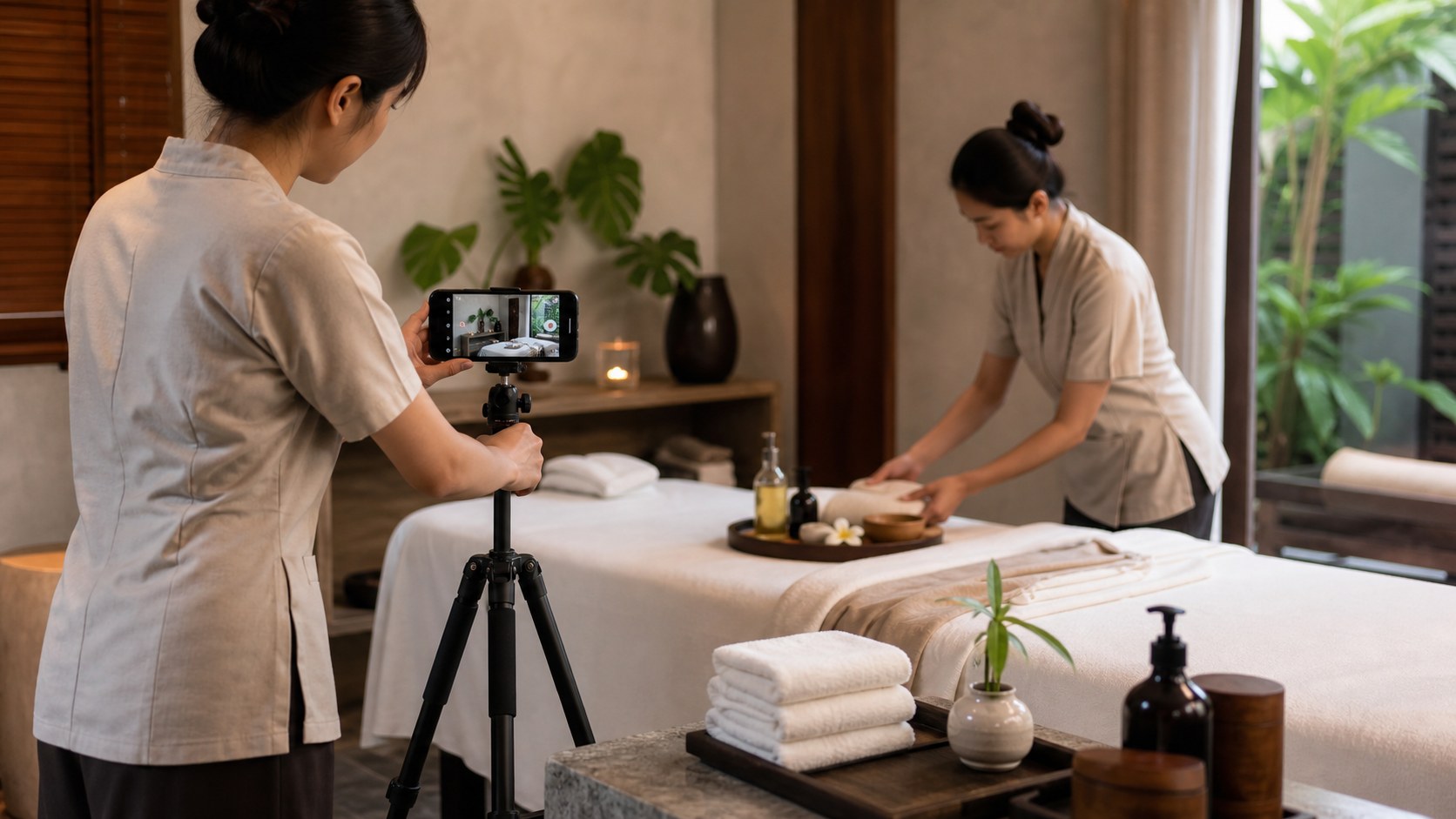
A spa does not need to be everywhere. It should choose the social platforms that show its experience best, speak to its audience and can be supplied with consistent quality.
Instagram remains central for spa image
Instagram is often the first platform to work on because it combines image, short video, stories, messages and advertising. It can show atmosphere, gestures, details and social proof.
But Instagram requires consistent visual direction. Photos that are too dark, videos that are too loud or repeated promotional text can weaken a premium brand. Production should respect the calm of the place.
- Show gestures, materials, team and preparation rather than only promotions.
- Use stories for availability, behind the scenes and quick replies.
- Build a visual grid that matches the website.
TikTok, Facebook, LinkedIn and YouTube play different roles
TikTok can make a gesture, tip or transformation visible, but it needs the right rhythm and language. Facebook remains useful for some local audiences, communities and campaigns. LinkedIn fits B2B spas, hotels, investors and recruitment. YouTube can carry longer educational videos.
The choice depends on the audience. A luxury hotel spa will not need the same mix as an urban day spa, massage school or product brand.
- Choose one primary platform and one secondary platform.
- Adapt the format without changing the brand promise.
- Avoid trends that contradict premium positioning.

Produce less, but better
Regularity matters, but it should not sacrifice quality. A spa can build a monthly content bank: five detail photos, three gesture videos, two team portraits, one short FAQ and one seasonal offer.
Moderation also matters. Social messages need fast, professional and booking-oriented replies. Without follow-up, social presence creates attention but not revenue.
- Prepare short scripts for video and direct-message replies.
- Film in natural light with a stable frame.
- Connect each piece of content to a page, offer or action.
Practical quality check for Which Social Media Platforms Should a Spa Use in 2026?
Digital topics are valuable when they remove friction from the guest journey and the team workflow. For this article, the test is simple: can a spa owner read "Which Social Media Platforms Should a Spa Use in 2026?" and know what to check, what to improve and what result should change in the business? If the answer is vague, the topic needs to be translated into a concrete operating decision, not left as a broad marketing idea.
Use this topic as a short management review. Compare the current guest journey with the promise in the title, then look for gaps in booking data, response quality, system adoption, page clarity and operational handoffs. The strongest version of the article is the one that connects the idea to real rooms, real staff behavior, real booking steps and real follow-up after the visit.
Frequently Asked Questions
Does every spa need to be on TikTok?
Only if the audience, tone and production capacity fit. TikTok can be powerful, but it should not push a premium brand into artificial behavior.
Which platform should a spa choose first?
For many spas, Instagram is the natural starting point. The second platform depends on the audience: Facebook for local, LinkedIn for B2B, YouTube for education and TikTok for video discovery.
Sources and Further Reading
- Instagram Help Center - Instagram for Business - Official guidance on business accounts, ads and Instagram insights.
- Google Business Profile - Guidelines for representing your business - Official reference for local presence, business information and representation rules.
- Google Search Central - SEO Starter Guide - Baseline guidance for useful content, descriptive URLs and clear page structure.
Need to turn this diagnosis into an action plan? Talk to NUAD SPA.